Build a Ventilation Team That Understands the “Why”

Effective ventilation is one of the most decisive tactical functions on the fireground. When executed correctly, it directly improves tenability, visibility, and interior conditions for both victims and firefighters. When executed poorly—or at the wrong time—it can rapidly accelerate fire growth and place crews at extreme risk. Getting the best out of your ventilation team, therefore, requires a combination of leadership, timing, coordination, and technical competence.

The “Why”

High-performing ventilation crews are not just tool operators—they are tacticians. Fire company officers must ensure their firefighters understand flow path, fire behavior, and the impact of air movement on heat release rate. Ventilation is not about “cutting a hole” or “breaking windows”—it is about controlling the environment.

Your team should understand:

How ventilation introduces oxygen and can intensify fire conditions The relationship between ventilation and fire attack (coordination is non-negotiable) The difference between vertical and horizontal ventilation and when each is appropriate Indicators of ventilation-limited vs. fuel-limited fires

When firefighters understand the consequences of their actions, they operate with discipline instead of routine.

Train for Precision, Not Just Speed

There is a tendency to equate good ventilation with fast ventilation. Speed matters—but precision matters more. A poorly placed ventilation opening can be ineffective or even dangerous.

Focus training on:

Proper hole placement (over the seat of the fire whenever possible) Size and effectiveness of openings (adequate exhaust vs. ineffective cuts) Saw handling under realistic conditions (pitch, footing, smoke, noise) Roof size-up and structural awareness (truss vs. legacy construction, collapse indicators)

Repetition under realistic conditions builds competence. Competence builds confidence. Confidence leads to controlled execution under pressure.

Assign Clear Roles on the Roof or Ventilation Group

Your ventilation team should operate like a coordinated unit—not a collection of individuals. Assign specific roles:

Supervisor (often the officer or senior firefighter): Maintains situational awareness, reads smoke/fire conditions, ensures coordination with interior crews Primary saw operator(s): Executes cuts Backup firefighter: Assists with tool management, monitors roof conditions, provides safety oversight

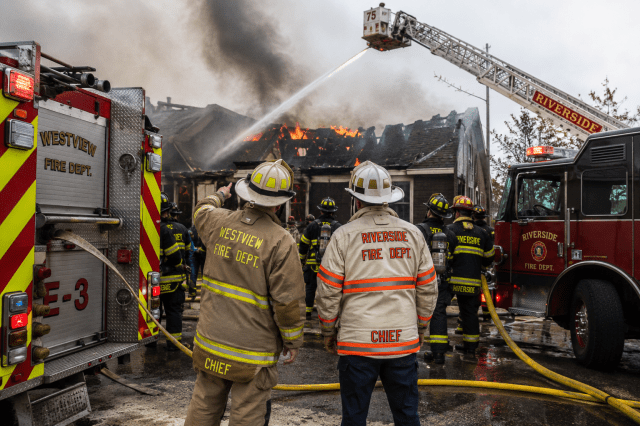
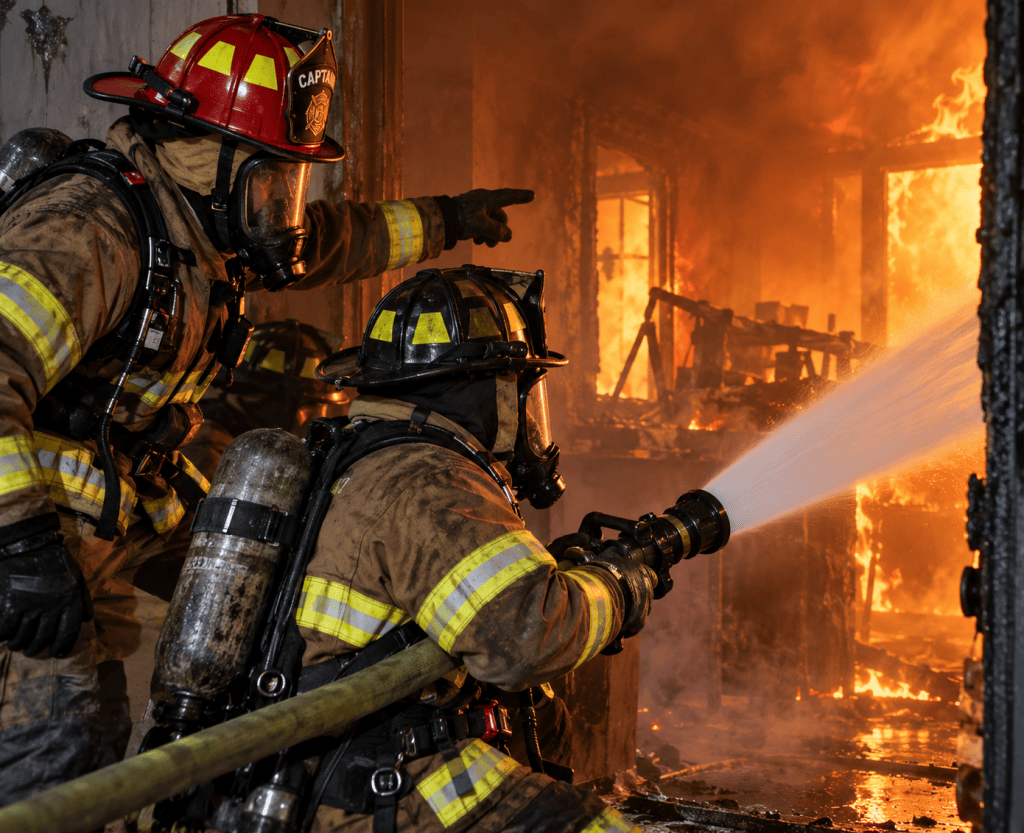
The presence of a clearly identified supervisor—like the firefighter in the red helmet in your scenario—is critical. That individual should not be task-saturated with cutting; their job is to think, read conditions, and coordinate.

Coordination Is the Difference Between Success and Disaster

Ventilation must be coordinated with fire attack. This is where many operations succeed or fail.

Key coordination principles:

Do not ventilate until water is ready or being applied (unless performing life-saving vent-enter-search operations) Maintain communication between ventilation and interior crews Understand that ventilation without suppression increases fire intensity

A well-timed ventilation opening can dramatically improve interior conditions. A poorly timed one can trigger rapid fire development or flashover.

Critical Points During a Fire When Ventilation Is Essential

There are several operational benchmarks where ventilation becomes tactically critical:

1. Pre-Entry or Initial Fire Attack (Coordinated)

When crews are preparing to make entry, coordinated ventilation can:

Reduce interior temperatures Improve visibility Increase survivability for trapped occupants

This must be tightly timed with hoseline advancement.

2. Search and Rescue Operations

Ventilation improves tenability and increases the likelihood of victim survival. Horizontal ventilation (targeted window removal) or VES (Vent-Enter-Search) may be used when:

Victims are suspected inside Conditions are rapidly deteriorating

This is one of the few scenarios where ventilation may precede full suppression—but it must be controlled and deliberate.

3. Fire Showing from the Roof / Attic Involvement

When fire has extended into attic spaces or is pushing through the roof:

Vertical ventilation becomes critical to release heat and gases Properly placed cuts can prevent lateral spread and improve interior conditions

Failure to ventilate in these conditions can lead to rapid fire extension and structural compromise.

4. Post-Knockdown Overhaul

After the main body of fire is controlled:

Ventilation removes residual heat, smoke, and toxic gases Improves conditions for overhaul crews Reduces rekindle potential by exposing hidden fire

5. High Heat / Limited Visibility Conditions

When interior crews report extreme heat and zero visibility:

Ventilation can dramatically change interior conditions within seconds Must be coordinated to avoid worsening the environment

Emphasize Safety and Structural Awareness

Your ventilation team operates in one of the most hazardous positions on the fireground—especially on roofs.

Ensure your team consistently:

Sounds the roof and monitors structural integrity Identifies collapse indicators (spongy decking, sagging, heavy fire involvement) Maintains egress routes (ladders placed strategically) Works off ladders or aerials when appropriate

A strong ventilation team is aggressive—but never reckless.

Final Thought

The best ventilation teams are built through disciplined training, strong leadership, and a deep understanding of fire dynamics. As an officer, your role is to ensure your team doesn’t just perform ventilation—they execute it with purpose, timing, and coordination.

When done right, ventilation is a force multiplier. It makes every other fireground function more effective. When done wrong, it becomes a catalyst for tragedy.

Your job is to ensure it’s always the former.

Commanding the Search: Best Practices for Fire Company Officers Directing Search and Rescue

Search and rescue is one of the most time-sensitive, high-risk, and mission-critical functions on the fireground. For the fire company officer, success is not accidental—it is the product of disciplined command presence, tactical clarity, and deliberate control of firefighter behavior inside an immediately dangerous to life and health (IDLH) environment.

At its core, effective search is not about speed alone—it is about coordinated aggression under control.

1. Establish Search as a Tactical Priority—Not an Afterthought

The most effective officers make an early, conscious decision regarding search. That decision is driven by:

Time of day (life hazard probability) Occupancy type and known victim profile Reports of trapped occupants Fire location and growth stage

Search must be integrated into the incident action plan (IAP)—not delayed until after fire control unless conditions dictate.

Best Practice:

Assign search explicitly on arrival or assume it as the first-due company when appropriate. Communicate clearly: “Engine 1 initiating primary search, alpha side, first floor.”

This establishes accountability and sets the tone for disciplined execution.

2. Read the Building Before You Commit Your Crew

Search begins before entry. The officer must perform a rapid size-up that includes:

Building layout and access/egress points Window and door locations (victim egress potential) Fire location relative to likely victim areas (bedrooms, exits) Flow path indicators (smoke movement, air track)

This informs search prioritization, not just entry.

Best Practice:

Target areas of refuge first (bedrooms, behind closed doors). Consider vent-enter-search (VES) for high-probability victim areas when conditions support it.

A disciplined officer does not “wander and hope”—they hunt with purpose.

3. Maintain Crew Integrity and Accountability

Freelancing kills firefighters. The officer’s responsibility is to ensure:

Crew stays together (or operates in assigned pairs with strict accountability) Continuous orientation is maintained (wall, hose line, or search rope) Progress is communicated to command

Best Practice:

Use oriented search whenever possible—one firefighter maintains orientation while others sweep. Conduct periodic verbal or physical check-ins: “Sound off—where are you?”

A lost crew cannot rescue anyone.

4. Control the Pace: Fast Is Fine—Out of Control Is Fatal

Search must be aggressive—but not reckless. Officers must constantly balance:

Speed vs. survivability Visibility vs. orientation Fire conditions vs. tenability

Best Practice:

Slow down at decision points (doorways, stairs, room transitions). Sweep high-probability victim locations thoroughly—beds, closets, behind doors.

Remember: Missing a victim is worse than moving slower.

5. Coordinate with Fire Attack and Ventilation

Uncoordinated fireground operations can rapidly convert survivable spaces into fatal ones.

Search officers must maintain awareness of:

Hoseline location and progress Ventilation timing and type Changing fire conditions (flashover indicators, rollover, heat increase)

Best Practice:

Avoid operating ahead of the hoseline in high heat/fire conditions unless performing targeted VES. Communicate: “Search team operating ahead of fire—conditions deteriorating.”

Search does not occur in a vacuum—it is part of a coordinated system.

6. Prioritize Oriented and Targeted Search Techniques

Random, unstructured searching wastes time and increases risk. High-performing companies use:

Oriented Search

One firefighter maintains a fixed reference (door, hallway, wall) Others search off that orientation point

Targeted Search

Focus on likely victim locations first (beds, couches, egress paths)

VES (Vent-Enter-Search)

Isolate the room Control the door Conduct rapid, focused search

Best Practice:

Match the search method to conditions and staffing. Train repeatedly so these techniques are automatic under stress.

7. Continuously Evaluate Conditions and Survivability

The officer must constantly ask:

Is this environment survivable for victims? Is it survivable for my crew? Are conditions improving or deteriorating?

Indicators such as extreme heat, zero visibility with high velocity smoke, and structural compromise must drive decisions.

Best Practice:

Be willing to withdraw and reposition. Transition from search to fire control support if it improves victim survivability.

Courage is not staying too long—it is making the right call.

8. Communicate Clearly, Concisely, and Frequently

Communication is the backbone of coordinated search.

Transmit:

Assignment and location Progress and areas cleared Victim findings Changing conditions

Best Practice:

Use CAN reports (Conditions, Actions, Needs): “Command from Engine 1: Primary search first floor alpha complete, negative victims, moving to second floor.”

This builds situational awareness across the entire incident.

9. Mark, Control, and Track Your Search

Systematic search requires discipline in tracking progress.

Mark entrances when appropriate Communicate cleared areas Avoid duplication or missed spaces

Best Practice:

Verbally confirm: “Kitchen clear, moving to bravo bedroom.” Maintain a mental or physical map of searched vs. unsearched areas.

Search is a system—not a guess.

10. Train Like You Expect to Perform

No officer can direct an effective search without a well-trained crew.

Training must include:

Zero-visibility search drills Oriented search and VES repetitions Victim removal under realistic conditions Air management and emergency procedures

Best Practice:

Build muscle memory and decision-making under stress. Reinforce expectations: disciplined movement, communication, and accountability.

You will not rise to the occasion—you will default to your training.

Closing Thought: The Officer Sets the Standard

Search and rescue success is a direct reflection of the company officer’s leadership. Firefighters will move as fast, as disciplined, and as effectively as they are directed.

The officer must be:

Decisive in assigning search Tactical in prioritizing areas Relentless in maintaining control Honest in evaluating conditions

Because at the end of the day, search is not just a task—it is a promise:

That we will go where others cannot, find those who cannot save themselves, and bring them out—alive if possible, and always with purpose.

Improving as a Fire Company Officer Amid Life’s Distractions

In today’s fire service, the role of a fire company officer demands more than tactical competence on the fireground. Officers are responsible for leadership, mentorship, operational readiness, training, administrative responsibilities, and the well-being of their crews. At the same time, they must manage the realities of life outside the firehouse—family obligations, personal health, financial responsibilities, and the countless distractions that come with modern life. The challenge, therefore, is not simply becoming a better officer, but continuing to improve while navigating these competing demands.

The first step for company officers is recognizing that professional growth rarely occurs in large, uninterrupted blocks of time. The fire service schedule is unpredictable, and personal life is equally complex. Waiting for the “perfect time” to focus on development often leads to stagnation. Instead, effective officers learn to improve incrementally. Reading a few pages of a leadership book during downtime, reviewing a training article between calls, or listening to a fire service podcast during a commute can accumulate into significant professional development over time. Small, consistent efforts compound.

Another key strategy is establishing routines that prioritize improvement. Fire company officers who intentionally schedule time for training, reflection, and learning are far more likely to sustain growth. This might mean dedicating a specific portion of each shift to reviewing building layouts in the district, discussing recent fireground case studies with the crew, or practicing decision-making scenarios. At home, it may involve setting aside a few quiet minutes each evening to review notes, read, or reflect on the day’s experiences. Improvement becomes more sustainable when it becomes habitual.

Equally important is learning to filter distractions. Modern life provides a constant stream of notifications, social media, emails, and administrative demands. While many of these are unavoidable, officers must develop the discipline to focus on what truly matters. Prioritizing activities that enhance leadership, operational readiness, and crew development ensures that limited time is invested where it produces the greatest impact. Not every task deserves equal attention.

Family life presents another dimension of this balance. Many fire officers, especially those with spouses and children, understand that growth in the profession should never come at the expense of relationships at home. In fact, strong support systems often enable officers to perform better at work. Communicating openly with family members about schedules, goals, and responsibilities helps create mutual understanding. Officers who maintain balance between professional ambition and family commitments tend to sustain long-term growth without burnout.

Mentorship also plays an essential role in continuous improvement. No officer develops alone. Seeking guidance from experienced chiefs, seasoned company officers, or respected instructors provides valuable perspective. These mentors often offer insights that help officers avoid common pitfalls and navigate challenges more effectively. At the same time, mentoring younger firefighters reinforces the officer’s own learning. Teaching others forces leaders to refine their knowledge and articulate their decision-making processes.

Reflection is another powerful but often overlooked tool. After significant incidents, training evolutions, or even routine calls, thoughtful officers ask themselves simple questions: What went well? What could have gone better? What should I do differently next time? This habit of honest self-evaluation transforms everyday experiences into learning opportunities. Improvement does not always require new information—sometimes it simply requires thoughtful reflection.

Finally, officers must remember that improvement is a lifelong process. The fire service evolves continuously through new technologies, building construction methods, research, and operational strategies. Officers who remain curious and humble are better prepared to adapt. They understand that leadership is not a destination but a continual pursuit of competence and character.

Life will always present distractions—shift work, family obligations, administrative demands, and the unpredictability of emergency response. Yet the most effective fire company officers do not wait for distractions to disappear. Instead, they build habits, routines, and perspectives that allow them to improve despite them. Over time, these small efforts accumulate into meaningful growth, strengthening both the officer and the firefighters they are entrusted to lead.

In the end, the goal is simple: to become just a little better today than yesterday. For a fire company officer, that steady commitment to improvement—no matter how busy life becomes—can shape the culture, safety, and effectiveness of the entire crew. 🚒

Supervising the “Smarter-Than-the-Officer” Firefighter

Every fire company officer will eventually supervise a firefighter who believes they are more knowledgeable, more capable, or more progressive than the officer assigned to lead them. Sometimes that perception comes from genuine intelligence, strong training backgrounds, or outside experience. Other times it comes from immaturity, frustration, or a misunderstanding of what leadership actually requires. Regardless of the cause, the situation can challenge company cohesion, authority, and operational discipline if it is not handled professionally.

The first step for a company officer is to understand the difference between intelligence and leadership responsibility. Firefighters are hired for their technical skill and physical ability, but officers are promoted because they carry the burden of decision-making, accountability, and risk management. The officer is responsible not only for the outcome of an incident but also for the safety, behavior, and performance of the entire crew. A firefighter may know a great deal about building construction, ventilation tactics, or EMS protocols, but the officer must synthesize information, evaluate risk, coordinate resources, and make decisions that affect everyone operating on the scene.

A confident firefighter who asks questions or offers ideas should not automatically be seen as a problem. In fact, some of the best firefighters in the service are naturally curious and analytical. Officers should avoid reacting defensively when firefighters challenge ideas or suggest alternatives. Instead, the officer should view this as an opportunity to build engagement and strengthen the team. Encouraging discussion during training, after-action reviews, and station conversations allows firefighters to feel heard while reinforcing the officer’s role as the final decision-maker.

Where problems arise is when confidence turns into disrespect or undermining behavior. A firefighter who constantly questions orders on the fireground, dismisses guidance in front of others, or behaves as though they are running the company creates a breakdown in command presence. In those cases, the officer must address the issue directly and professionally. Expectations should be clearly communicated: respectful dialogue is welcome, but once a decision is made, the crew moves forward together. Fireground operations are not a debate stage. Unity of command and disciplined execution remain essential to firefighter safety.

Another effective strategy for officers is to assign responsibility and ownership. When a firefighter believes they are highly capable, giving them meaningful roles during training or station projects can be productive. Ask them to lead a drill, research a new piece of equipment, or present a short training session to the company. This approach accomplishes two goals. First, it channels their energy into improving the organization. Second, it exposes them to the challenges of leadership—planning, communication, and accountability—that officers manage daily.

Humility from the officer also plays an important role. No officer knows everything. Fire service knowledge evolves constantly through research, new building methods, and changing tactics. When a firefighter offers a valid insight, acknowledging it builds credibility rather than weakening authority. A confident officer can say, “That’s a good point—let’s explore that,” without losing command presence. In fact, officers who are willing to learn often earn greater respect from their crews.

At the same time, officers must maintain professional boundaries. Leadership is not a popularity contest. If a firefighter’s behavior disrupts the crew, erodes discipline, or threatens operational safety, corrective action is necessary. This may involve counseling, documentation, or involving higher supervision if necessary. Addressing these issues early prevents them from spreading throughout the company.

Ultimately, supervising firefighters who believe they are smarter than their officers requires balance. Officers must combine confidence with humility, discipline with openness, and authority with mentorship. The goal is not to “win” an argument with a firefighter but to develop a professional team that operates safely and effectively under pressure.

In the fire service, the smartest company is not the one with the smartest individual firefighter—it is the one where knowledge, experience, and leadership work together to protect the crew and serve the community. When officers harness the strengths of confident firefighters while maintaining clear leadership, the entire company becomes stronger.

Should Fire Company Officers Ensure a Backup Hoseline is in place before Fire Attack?

Fireground decision-making is rarely binary. It is dynamic, risk-weighted, and dependent on conditions observed in real time. One recurring operational question for company officers is whether a backup hoseline must be in position—or at minimum advancing—before initiating interior fire attack.

This issue intersects doctrine from the National Fire Protection Association (NFPA), International Fire Service Training Association (IFSTA), and International Association of Fire Chiefs (IAFC), as well as contemporary fire dynamics research from UL Fire Safety Research Institute (UL FSRI). It is not merely tactical—it is a matter of risk management, survivability, and command discipline.


The Strategic Context: Risk vs. Speed

Fire company officers operate within a structured risk management model:

  • Risk a lot to save savable lives
  • Risk a little to save savable property
  • Risk nothing for what is already lost

The presence of a backup line directly influences how much risk is being assumed.

A backup line serves three primary operational purposes:

  1. Protection of the attack crew if conditions deteriorate
  2. Control of fire extension beyond the initial compartment
  3. Redundancy in case of mechanical failure, kinks, burst lengths, or staffing interruption

Without a secondary line available, the initial crew operates with limited tactical resilience.


What Doctrine and Standards Imply

While no universal mandate states “thou shalt not advance without a backup line,” several standards imply the expectation of layered protection.

  • National Fire Protection Association 1710/1720 establish minimum staffing models that assume multiple companies responding.
  • National Fire Protection Association (Fire Department Occupational Safety and Health Program) emphasizes risk assessment and crew integrity.
  • International Fire Service Training Association Essentials texts consistently describe backup line deployment as part of coordinated fire attack strategy.
  • Research from UL Fire Safety Research Institute demonstrates how rapidly interior conditions can transition to untenable without warning (flow path changes, ventilation-limited fires, flashover potential).

The implication: interior operations assume layered water application capability.


Fire Dynamics Reality

Modern residential fires behave differently than legacy fires.

Key considerations:

  • Synthetic fuel loads increase heat release rates.
  • Flashover can occur in under 4–6 minutes.
  • Flow path changes from door control or ventilation can intensify interior conditions.
  • Lightweight construction accelerates structural compromise, and this is commonplace today.

A single hoseline may control a room-and-contents fire.
It may not control concealed extension or attic involvement.

A backup line is not redundancy for comfort—it is redundancy for survivability.


When Immediate Attack Without Backup May Be Justified

There are operational scenarios where delaying fire attack to await a backup line may increase risk:

  1. Known viable victim inside
  2. Small, isolated compartment fire
  3. Engine arriving significantly ahead of second-due company
  4. Transitional attack being performed prior to interior push
  5. Rural response models with extended arrival intervals

In these cases, the officer must evaluate:

  • Fire volume and location
  • Available staffing
  • Water supply reliability
  • Egress options
  • Structural integrity

The key variable is control. If the initial line can quickly control the fire, the risk window narrows.


When Backup Should Be Mandatory Before Interior Advancement

There are clear red flags where advancing without backup is strategically unsound:

  • Heavy fire beyond the room of origin
  • Multiple floors involved
  • Commercial occupancy
  • Wind-driven fire conditions
  • Known hoarding or high fuel load
  • Limited staffing (two-person crew)
  • Unsecured water supply

In these environments, the fire attack team is operating in a high-uncertainty, high-energy state. Redundancy becomes critical.


The Command Perspective

From a command standpoint, insisting on a backup line is less about tradition and more about maintaining:

  • Tactical depth
  • Crew survivability margin
  • Contingency capacity
  • Fire spread control

A disciplined command presence does not rush interior engagement without adequate operational layers unless the life risk calculus clearly justifies it.

Company officers must communicate:

  • “Primary line advancing.”
  • “Backup line in position.”
  • “Water supply secured.”
  • “Ventilation coordinated.”

Without those benchmarks, the attack becomes fragile.


Staffing Reality in Combination Departments

For departments operating under volunteer or combination staffing models—common throughout Indiana and the Midwest—the calculus becomes even more nuanced.

If your first-due engine arrives with:

  • Officer + 2 firefighters
  • Tank water only
  • Second-due 8–12 minutes out

You must evaluate whether rapid knockdown outweighs operating without backup. Often, a controlled transitional attack buys time for reinforcement without committing crews into a deteriorating interior.

The decision should be intentional—not habitual.


Leadership Implications for Company Officers

This issue ultimately tests leadership maturity.

An experienced officer understands:

  • Speed without structure increases risk.
  • Delay without purpose increases damage.
  • Discipline under pressure preserves crews.

Ensuring a backup line is coming—or already positioned—demonstrates foresight. It signals to the crew that their safety margin matters.

You are not slowing the fire attack.
You are stabilizing the operating environment.


A Practical Decision Model for Officers

Before committing interior:

  1. Is there confirmed savable life?
  2. Can the initial line control the fire volume?
  3. Is water supply secure?
  4. Is backup line in place or advancing?
  5. Are ventilation and search coordinated?
  6. What is the structural stability profile?
  7. What is our egress plan if conditions deteriorate?

If more than two of these are uncertain, reconsider interior advancement without backup.


Conclusion

Should fire company officers ensure a backup hoseline is in place or coming before attacking a fire?

In most cases, yes.

It enhances tactical flexibility, improves survivability, and aligns with modern fire dynamics research and professional risk management doctrine.

However, fireground leadership is not rigid—it is analytical. There will be moments when calculated, immediate action outweighs ideal deployment sequencing.

The difference lies in whether the officer is acting from urgency or from disciplined judgment.

A backup line is not just a second hose.
It is a margin of safety for the firefighters who trust your decision.

And that margin matters.

Leading From the Front: Preparing Firefighters for New Technology and Shaping the Future of the Fire Service

The fire service has never been static. From the transition to self-contained breathing apparatus, to thermal imaging cameras, to modern incident command systems, every generation has faced disruptive change. Today’s company officer stands at a similar inflection point: battery-powered equipment, data-driven decision-making, advanced PPE sensors, drone integration, and electric apparatus are no longer theoretical—they are operational realities.

The question is not whether technology will reshape firefighting. It is whether company officers will lead that transition or be overtaken by it.

1. Establish the “Why” Before the “How”

Firefighters are pragmatic professionals. They do not embrace change because it is new; they embrace it because it works.

Before introducing new tools—whether battery-powered extrication equipment, drone reconnaissance platforms, or digital accountability systems—the company officer must articulate three core justifications:

Operational effectiveness (Does it improve speed, safety, or decision quality?) Risk reduction (Does it reduce firefighter exposure or injury potential?) Mission alignment (Does it improve service to the community?)

If the officer cannot clearly explain these three dimensions, the crew will default to skepticism. Technology without mission clarity becomes a gadget. Technology aligned with risk reduction becomes doctrine.

2. Build Competence Before Crisis

Technology must be normalized in training long before it appears at a working fire.

For example:

Drone deployment should be drilled during training burns and preplans. Battery-powered tools should be integrated into routine extrication evolutions. Digital reporting systems should be used daily—not just during inspections.

A company officer who treats new equipment as “special event” tools ensures operational hesitation. Repetition builds muscle memory; muscle memory builds confidence; confidence drives performance under stress.

As with any skill set aligned with IFSTA Essentials or NFPA job performance requirements, mastery requires structured repetition, evaluation, and after-action review.

3. Model Technological Literacy

Leadership credibility is inseparable from competence.

If a company officer expects firefighters to embrace new data platforms, telematics dashboards, or energy-efficient apparatus, the officer must:

Understand system architecture at a functional level. Be able to troubleshoot basic issues. Interpret performance data meaningfully.

In today’s environment, technological illiteracy erodes authority. Officers do not need to be engineers, but they must be operationally fluent. The future battalion chief or assistant chief is being formed at the company level through exposure to data-informed leadership.

4. Address Cultural Resistance Professionally

Resistance to change in the fire service is often rooted in experience—not ignorance. Veteran firefighters have seen failed rollouts, under-tested equipment, and administrative fads.

The effective company officer:

Invites critique. Distinguishes between constructive skepticism and obstructionism. Incorporates field feedback into implementation. Documents performance outcomes.

When firefighters see their operational input reflected in policy or procurement refinement, resistance converts into ownership.

5. Connect Technology to Firefighter Health and Safety

The most persuasive technological argument in today’s fire service is not novelty—it is survivability.

Examples include:

Reduced carcinogen exposure through electric ventilation tools. Lower noise and exhaust exposure with battery-powered apparatus. Real-time biometric monitoring for rehab and accountability. Drone thermal imaging to limit unnecessary roof operations.

When framed correctly, technology becomes an extension of risk management and occupational cancer reduction strategies—not a replacement for tradition.

6. Develop Data-Informed Firefighters

Modern firefighting increasingly intersects with analytics:

Response time modeling Call density mapping Hydrant flow tracking Preventive maintenance diagnostics Energy system risk assessment (solar arrays, lithium-ion storage)

Company officers should introduce crews to post-incident reviews that incorporate data visualization and trend analysis. When firefighters understand patterns—not just incidents—they begin to think strategically.

This approach prepares them not just for the next fire, but for leadership roles.

7. Integrate Emerging Risks into Training

New technology in the community creates new hazards:

Electric vehicle fires Lithium-ion battery storage systems Solar installations Smart building systems Autonomous vehicle integration

Preparation is not optional. Company officers must ensure their personnel understand:

Thermal runaway behavior. Water supply implications. Defensive vs. offensive decision thresholds. Updated preplan documentation standards.

Future-oriented officers train on tomorrow’s hazards today.

8. Shape Procurement Through Field Evidence

Company officers are uniquely positioned to influence future equipment selection. They should:

Document tool performance metrics. Track battery longevity and maintenance cycles. Compare deployment times. Evaluate firefighter fatigue differences.

Evidence-based recommendations carry more weight with command staff than anecdote. When officers present operational data, they shape the technological trajectory of the department.

9. Preserve the Core While Advancing the Edge

Technology enhances firefighting—it does not replace fundamentals.

Hose advancement, search discipline, building construction knowledge, and crew integrity remain non-negotiable. The officer’s role is to ensure that innovation strengthens, rather than distracts from, foundational competencies.

Tradition provides identity. Technology provides advantage. Professional leadership integrates both.

Conclusion: Leadership Defines the Future

The future of firefighting will not be defined solely by drones, electric apparatus, artificial intelligence, or advanced PPE. It will be defined by the leaders who decide how—and whether—those tools are implemented effectively.

The company officer is the hinge point between policy and performance.

By fostering technological literacy, encouraging disciplined experimentation, grounding change in firefighter safety, and maintaining operational excellence, today’s officers do more than prepare their crews for new tools—they shape the culture that will carry the fire service forward.

The future does not arrive on its own.

It is trained for.

Knowing When You’re Ready to Test for Promotion in the Fire Service

Promotion in the fire service is more than a badge change or a bump in pay—it is a commitment to broader responsibility, deeper accountability, and service beyond yourself. One of the hardest questions firefighters face is not how to promote, but when. There is no single checklist that guarantees readiness, but there are clear indicators—professional, personal, and cultural—that signal when it may be time to step forward.

You’ve Mastered Your Current Role—and Others Trust You in It

Readiness begins with competence. Firefighters who are prepared for promotion consistently perform their current job at a high level, even when no one is watching. They know their district, their equipment, and their standard operating guidelines cold. More importantly, they are firefighters others rely on during complex or high-stress incidents. When peers seek you out for advice, clarification, or reassurance on scene, it is often a sign that you have earned informal leadership credibility—an essential precursor to formal rank.

You’re Thinking Beyond Yourself and Your Seat

A strong signal of promotional readiness is a shift in perspective. Instead of focusing solely on your assignment, you begin thinking about crew outcomes, company performance, and scene-level consequences. You notice developing problems before they become emergencies: a probationary firefighter struggling quietly, a piece of equipment consistently coming up short, or training gaps that could surface on the fireground. This broader situational awareness reflects an officer mindset—one rooted in prevention, preparation, and accountability.

You’re Willing to Be Responsible, Not Just Right

Promotion requires comfort with ownership. Officers are responsible not only for decisions they make, but also for outcomes driven by their crew. Firefighters ready to promote understand that leadership means accepting responsibility even when circumstances are imperfect. They are willing to make decisions with incomplete information, explain those decisions afterward, and learn publicly from mistakes. If you find yourself more concerned with doing what’s right than being seen as right, you are maturing into leadership.

You’re Actively Preparing—Not Waiting to Be Tapped

Those ready for promotion do not wait for someone else to tell them they are ready. They seek out acting assignments, special projects, committee work, and instructor roles. They study policies, leadership texts, and promotional material well before a test announcement. Preparation becomes part of their routine, not a last-minute scramble. This proactive behavior demonstrates self-discipline and seriousness—qualities promotional boards often recognize quickly.

You Can Separate Ego from Authority

Rank magnifies character. Firefighters who are promotion-ready understand that authority exists to serve the mission and the people, not personal validation. They can give correction without humiliation, accept feedback without defensiveness, and enforce standards consistently—even with friends. If you are comfortable holding others accountable while still maintaining trust and respect, you are demonstrating emotional readiness for leadership.

Your Motivation Is Service, Not Escape

Finally, the why matters. Wanting to promote to escape an assignment, avoid physical work, or gain status is rarely sustainable. Firefighters who are truly ready see promotion as an opportunity to protect their people, improve the organization, and shape the next generation. They understand that officers often work harder, not less—and they are willing to accept that tradeoff.

Stepping Forward with Humility and Confidence

Promotion is not about perfection; it is about readiness to grow under pressure. If you are consistently competent, trusted by peers, thinking beyond yourself, preparing deliberately, and motivated by service, you are likely closer than you think. Testing for promotion is not a declaration that you know everything—it is a statement that you are ready to learn more, carry more, and give more to the fire service.

Preparing Firefighters for Severe Weather Operations

Severe weather is no longer an occasional disruption to fire station routines—it is an operational constant. Extreme heat, bitter cold, ice storms, flooding, high winds, and poor air quality all place unique physical and cognitive demands on firefighters. Station officers play a critical role in ensuring their crews are prepared to operate safely and effectively when conditions deteriorate. Preparation is not limited to reacting once the weather hits; it is a deliberate, year-round process grounded in training, equipment readiness, and leadership culture.

Build Weather Awareness into Daily Operations

Preparation starts with situational awareness. Officers should normalize daily weather briefings as part of shift change or morning roll call. This includes not only temperature and precipitation, but wind, heat index, wind chill, lightning risk, and flood potential. When firefighters understand why today’s conditions matter—how ice affects ladder placement or how heat impacts work-rest cycles—they are more likely to adjust tactics instinctively on scene.

Train for Conditions, Not Just Tasks

Many skills are taught in controlled environments, yet emergencies rarely occur under ideal conditions. Officers should deliberately incorporate adverse weather into drills: hose advancement on ice, ground ladder placement in high winds, EMS packaging in extreme cold, or rehab operations during heat waves. These evolutions reinforce that weather is not an inconvenience—it is a hazard that must be actively managed, just like fire behavior or traffic.

Emphasize Physiological Limits

Severe weather accelerates fatigue, dehydration, and decision-making errors. Officers must teach firefighters to recognize early signs of heat stress, hypothermia, and cold-related dexterity loss. Just as importantly, officers must model disciplined adherence to work-rest cycles, rehab, hydration, and crew rotation. When firefighters see officers taking weather seriously, they internalize that safety is not negotiable, even under pressure.

Ensure Equipment and PPE Readiness

Weather-specific preparation includes proactive equipment checks. Cold weather demands attention to frozen hose, pump operation, and battery performance. Heat requires functional cooling, hydration supplies, and shaded rehab areas. Flooding and storms require PPE appropriate for water, debris, and contamination hazards. Officers should regularly verify that seasonal equipment is accessible, functional, and that firefighters know how to deploy it without hesitation.

Adjust Staffing and Expectations

Severe weather often means longer incidents, higher call volume, and slower operations. Officers must plan for fatigue management by anticipating relief crews, mutual aid, and modified tactics. Expecting “normal-day” performance in abnormal conditions sets crews up for injury and failure. Clear communication about adjusted priorities—life safety first, property conservation second—keeps crews aligned and focused.

Reinforce a Culture of Speaking Up

Perhaps the most important preparation is cultural. Firefighters must feel empowered to report deteriorating conditions, near misses, or physical distress without fear of being labeled weak. Officers establish this tone through consistent messaging and action. A firefighter who speaks up early about weather-related risk may prevent an injury—or a line-of-duty death—later.

Lead Before the Storm Hits

Severe weather leadership is proactive, not reactive. Station officers who train realistically, communicate clearly, and respect environmental hazards prepare their firefighters not just to endure extreme conditions, but to operate professionally within them. When the weather turns hostile, preparation shows—not in speeches, but in calm decision-making, disciplined operations, and crews that come home safely at the end of the shift.

Advancing Projects Without Alienating the Crew: A Practical Guide for Fire Station Officers

Fire station officers live in a constant balancing act. On one side are projects—training initiatives, equipment upgrades, policy changes, station improvements, accreditation requirements, and administrative mandates. On the other side are firefighters who already carry heavy operational, physical, and personal workloads. The difference between a project that succeeds and one that quietly fails often has little to do with technical merit and everything to do with how it is led.

Pushing projects forward without alienating firefighters is not about being soft or avoiding accountability. It is about understanding station culture, respecting professional identity, and leading change in a way that preserves trust, ownership, and morale.

Understand That Resistance Is Often About Process, Not the Project

Firefighters rarely oppose improvement outright. What they resist is feeling controlled, rushed, or ignored. When a project appears suddenly, lacks context, or feels disconnected from daily realities, resistance naturally follows. Officers should recognize that skepticism is often a rational response to poor communication rather than a rejection of progress.

Before announcing a project, officers should ask themselves: Do my firefighters understand why this matters? If the answer is no, the project is already at risk.

Start With Purpose, Not Orders

Projects gain traction when firefighters understand the operational problem being solved. Officers should lead with the “why” before the “what.” Whether the project involves new training requirements, station logistics, or procedural changes, framing it in terms of safety, efficiency, or service delivery aligns it with firefighter values.

A project tied to firefighter safety, response effectiveness, or professionalism will always outperform one framed as “headquarters wants this done.”

Involve Firefighters Early and Meaningfully

Ownership reduces friction. When firefighters are invited into the planning phase—even in limited ways—they shift from passive recipients to active contributors. This does not mean decisions are made by committee, but it does mean firefighters have input on timelines, sequencing, or execution details.

Assigning small leadership roles within a project—such as research, tool evaluation, or drill design—allows firefighters to contribute expertise without undermining the officer’s authority.

Integrate Projects Into the Normal Rhythm of the Station

One of the fastest ways to alienate a crew is to treat projects as extra work layered on top of an already full shift. Effective officers integrate projects into existing routines: drills that double as training requirements, station maintenance aligned with inspection readiness, or paperwork completed during natural downtime.

When projects feel like part of the job rather than an interruption to it, resistance decreases dramatically.

Be Honest About Constraints and Tradeoffs

Firefighters respect honesty more than perfection. If a project is mandated, time-sensitive, or non-negotiable, say so clearly. What damages credibility is pretending that every initiative is flexible when it is not. Transparency builds trust, even when the message is unpopular.

At the same time, officers should acknowledge tradeoffs openly. Recognizing that a project adds workload—and thanking firefighters for carrying it—goes a long way toward maintaining goodwill.

Set Clear Expectations and Finish Strong

Nothing frustrates firefighters more than projects that drag on indefinitely or fade away without resolution. Officers should define clear expectations, milestones, and endpoints. When a project is complete, it should be acknowledged formally.

Closing the loop—by explaining outcomes, improvements achieved, or lessons learned—signals that the effort mattered and was not wasted.

Lead With Consistency and Credibility

Firefighters evaluate projects through the lens of leadership credibility. Officers who consistently show up prepared, participate alongside their crews, and apply standards evenly will encounter far less resistance than those who delegate everything downward.

Credibility is cumulative. Each well-led project makes the next one easier.

Conclusion: Progress Without Division Is a Leadership Skill

Advancing projects is not optional for fire station officers; it is part of professional responsibility. However, how projects are introduced, managed, and completed determines whether they strengthen or strain the officer–firefighter relationship.

Officers who communicate purpose, involve their crews, respect station culture, and follow through with consistency can move meaningful work forward without alienation. In doing so, they reinforce a culture where improvement is expected, collaboration is normal, and leadership is trusted—exactly the environment a modern fire station requires.

Processing Feedback as a Fire Station Officer: Turning Input into Leadership Capital

Fire station officers operate in an environment where performance, safety, and trust are inseparable. Feedback from firefighters—whether offered formally, casually, or under stress—is one of the most valuable leadership inputs an officer receives. How that feedback is processed often matters more than the feedback itself. Officers who treat feedback as a leadership asset rather than a personal critique are better positioned to build credibility, improve operations, and strengthen station culture.

Separate Emotion from Information

The first step in processing feedback is emotional discipline. Firefighters often deliver feedback bluntly, especially in high-stress environments. Officers must resist the instinct to react defensively or immediately justify decisions. Instead, the goal is to extract the underlying information: What problem is being identified? What outcome is the firefighter concerned about? By pausing and acknowledging the feedback—without immediately agreeing or disagreeing—the officer signals professionalism and psychological safety.

Evaluate Feedback Through the Operational Lens

Not all feedback requires action, but all feedback deserves evaluation. Effective officers assess input against operational realities such as policy, staffing, safety standards, and training objectives. A complaint about a drill, for example, may actually reveal a skills gap, unclear expectations, or fatigue from poor scheduling. Processing feedback means contextualizing it within mission priorities rather than treating it as a popularity poll.

Look for Patterns, Not Outliers

One-off comments may reflect individual preferences, but repeated themes indicate systemic issues. Officers should mentally catalog feedback over time and look for patterns related to morale, workload, communication, or equipment. When multiple firefighters independently raise similar concerns, that feedback warrants closer scrutiny—even if it challenges long-standing practices.

Close the Loop with Intentional Communication

Feedback loses value when firefighters feel it disappears into a void. Officers should intentionally “close the loop” by explaining what will change, what cannot change, and why. Transparency matters more than agreement. When firefighters understand the constraints behind decisions, trust increases—even when the outcome is not what they hoped for.

Use Feedback as a Development Tool

Feedback is not only about fixing problems; it is also a leadership development opportunity. Officers can use feedback to reflect on their communication style, delegation habits, and command presence. Asking follow-up questions such as, “What would success look like from your perspective?” turns feedback into collaborative problem-solving rather than hierarchical correction.

Maintain Authority While Demonstrating Humility

Processing feedback does not mean surrendering authority. Firefighters expect officers to make decisions, set standards, and enforce accountability. However, authority is strengthened—not weakened—when paired with humility. Officers who show they can listen, reflect, and adapt earn respect that cannot be achieved through rank alone.

Build Feedback into the Station Culture

The most effective stations normalize feedback rather than treating it as a special event. Informal check-ins, after-action reviews, and post-training debriefs create structured opportunities for firefighters to speak up. When feedback becomes routine, it becomes less personal and more professional.

Conclusion

Fire station officers who process feedback well transform everyday conversations into leadership capital. By listening without defensiveness, evaluating input through an operational lens, communicating transparently, and acting with intention, officers reinforce trust and improve performance. In a profession where lives depend on teamwork and clarity, the ability to process feedback is not a soft skill—it is a core leadership competency.