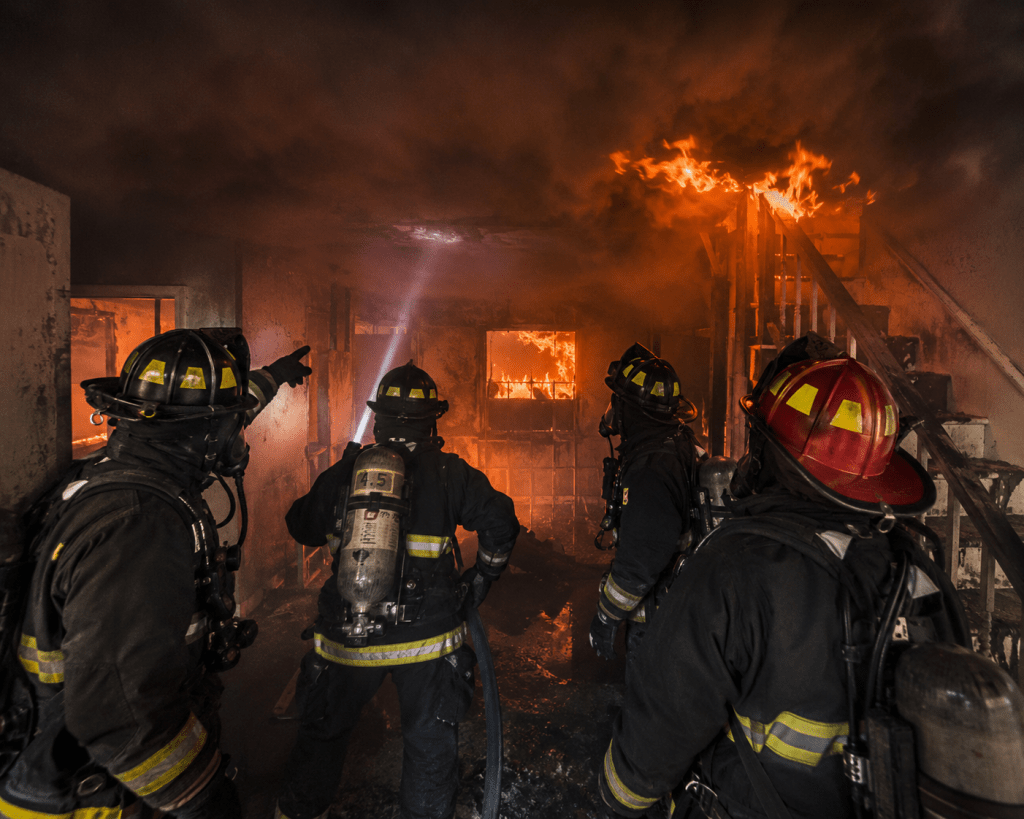
The modern fireground is faster, hotter, and less forgiving than ever before. Lightweight construction, synthetic fuel loads, open floor plans, and rapid fire progression create environments where conditions can change from survivable to catastrophic in seconds. In many firefighter fatality investigations and near-miss reports, the common thread is not simply that dangerous conditions existed—it is that firefighters failed to recognize how rapidly those conditions were deteriorating until they were already trapped, disoriented, low on air, or overwhelmed.
For fire company officers, one of the most important responsibilities is developing firefighters who can identify changing fire conditions early enough to take corrective action before a Mayday becomes necessary. The best Mayday is the one that never happens.
Teaching Firefighters to Read the Environment
Many young firefighters arrive at the station believing firefighting is primarily physical. Experienced officers understand that successful firefighters survive because they become students of fire behavior and situational awareness. Officers must continuously teach firefighters how to “read” the building, smoke, heat, and fire conditions throughout an incident.
Firefighters should learn to constantly evaluate:
- Smoke volume, velocity, density, and color
- Heat levels and changes in thermal conditions
- Air movement and flow paths
- Structural stability indicators
- Fire spread direction
- Floor integrity
- Changing visibility conditions
- Water application effectiveness
- Crew location and egress points
Company officers should constantly verbalize observations during training and actual incidents. Statements such as:
- “The smoke is getting darker and pressurized.”
- “Heat is banking down lower.”
- “We’re losing visibility.”
- “This floor feels soft.”
- “The fire is extending above us.”
These running commentaries teach firefighters how experienced officers process information on the fireground.
Over time, firefighters begin developing pattern recognition skills that allow them to identify deteriorating conditions instinctively.
Normalize Continuous Risk Assessment
One dangerous mindset among inexperienced firefighters is believing that once an assignment begins, it should continue regardless of changing conditions. Strong officers teach that every fire attack, search, ventilation operation, or overhaul assignment requires continuous reevaluation.
Conditions should constantly drive tactics.
Company officers should repeatedly ask firefighters during training:
- “What changed?”
- “Would you continue this push?”
- “What are your exit options?”
- “How much air do you have left?”
- “Are conditions improving or worsening?”
This develops firefighters who think critically instead of operating on autopilot.
The objective is to create firefighters who understand that withdrawing, repositioning, or changing tactics is not failure. It is disciplined survival decision-making.
Build Aggressive Air Management Habits
Many Maydays occur because firefighters stay too long, penetrate too deeply, or ignore diminishing air supplies while focused on completing an assignment.
Company officers must aggressively train air management until it becomes instinctive behavior.
Firefighters should know:
- Their air consumption rate under stress
- Their point-of-no-return
- Emergency reserve benchmarks
- How stress and workload affect air usage
- When to communicate low-air conditions early
Officers should require regular air checks during training and incidents. Firefighters should become comfortable communicating:
- “I’m at half bottle.”
- “I’m approaching exit air.”
- “Conditions are worsening.”
- “We need to back out and reset.”
Crews that communicate early rarely require rescue later.
Train Firefighters to Recognize Cognitive Overload
One of the most overlooked contributors to Maydays is cognitive overload. Firefighters under stress can become task-fixated and lose situational awareness.
Tunnel vision occurs when firefighters focus so heavily on a hoseline advancement, search assignment, or victim removal that they stop evaluating surrounding conditions.
Company officers must teach firefighters to recognize warning signs within themselves:
- Confusion or disorientation
- Difficulty communicating
- Increased breathing rate
- Panic sensations
- Loss of orientation
- Inability to locate exits
- Failure to track crew members
Firefighters must understand that recognizing these symptoms early and communicating them immediately is a sign of professionalism, not weakness.
Conduct Realistic Stress-Based Training
Classroom lectures alone do not build Mayday prevention skills. Firefighters must experience deteriorating conditions in controlled environments.
Effective officers incorporate:
- Reduced visibility drills
- Disorientation exercises
- Emergency egress scenarios
- SCBA failure simulations
- High-heat evolutions
- Wall breaches and confined-space movement
- Search drills with changing conditions
- Communications failures
- Rapid fire progression scenarios
Training should force firefighters to make decisions under stress while maintaining discipline and situational awareness.
After-action reviews are critical. Officers should ask:
- “When did conditions begin changing?”
- “What warning signs did you miss?”
- “What should have triggered withdrawal?”
- “When should you have communicated concerns?”
These discussions develop judgment that carries onto actual firegrounds.
Reinforce Crew Integrity Relentlessly
Firefighters operating alone or separated from crews are disproportionately represented in Mayday incidents.
Company officers must enforce crew integrity as a non-negotiable standard. Firefighters should never become comfortable freelancing, wandering, or losing contact with their officer or crew members.
Crews should constantly maintain:
- Visual contact
- Voice contact
- Physical contact when necessary
- Accountability awareness
- Orientation to exits and hoselines
Officers should immediately correct behavior that weakens crew integrity during both training and incidents.
Small discipline failures on routine calls become catastrophic failures at working fires.
Teach Firefighters That Retreat Is a Tactical Decision
One of the most dangerous cultural problems in the fire service is the belief that backing out means weakness.
Strong officers teach firefighters that survival and tactical repositioning are signs of professionalism. Conditions can overwhelm even highly skilled crews.
Firefighters should understand:
- The building is not worth their life
- No assignment justifies ignoring warning signs
- Tactical withdrawal protects crews for continued operations
- Repositioning often improves operational effectiveness
A firefighter who exits early because conditions are deteriorating is often preventing the very Mayday that would later place multiple additional crews at risk.
Company Officers Set the Tone
Firefighters ultimately mirror the behavior of their officers. Officers who ignore air alarms, push too deep, dismiss warning signs, or glorify reckless behavior create firefighters who will do the same.
Conversely, officers who demonstrate discipline, situational awareness, calm decision-making, and risk management build firefighters who operate intelligently under pressure.
Every fire becomes a teaching opportunity.
The officer who calmly says:
- “We’re backing out because conditions are worsening.”
- “We’re low on air.”
- “We’ve lost our orientation.”
- “We need another line before continuing.”
is teaching firefighters that survival-focused decision-making is part of aggressive professional firefighting.
Conclusion
Preventing Maydays begins long before a firefighter transmits an emergency radio message. It begins in training, supervision, and daily fireground leadership.
Company officers who intentionally develop situational awareness, air management discipline, communication skills, and realistic risk assessment within their firefighters create crews capable of recognizing deteriorating conditions early and reacting before a crisis develops.
The goal is not simply producing aggressive firefighters. The goal is producing firefighters who can remain aggressive while maintaining enough awareness and discipline to survive the increasingly dangerous environments in which they operate.

