The Backup Line
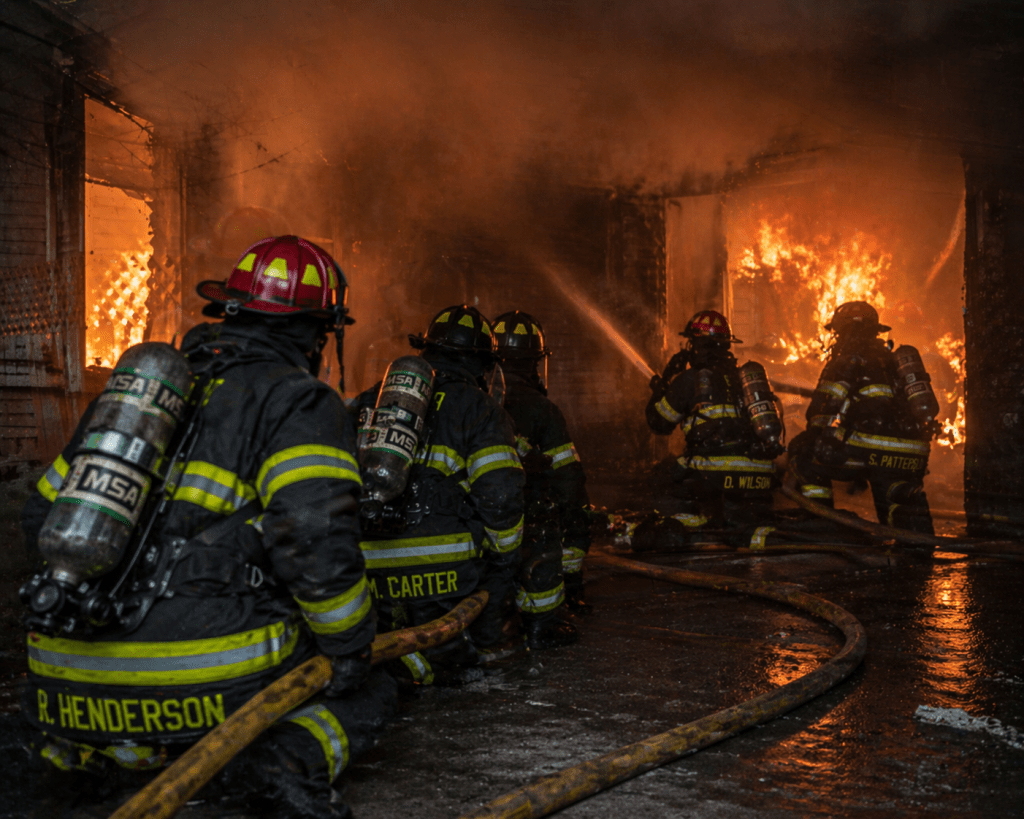
In many structure fires, attention naturally gravitates toward the initial attack line. Flames are visible, radio traffic is active, and the first line is often seen as the centerpiece of suppression operations. However, experienced fire company officers understand that the backup line is not secondary in importance—it is critical to firefighter safety, operational depth, and successful fire control. A poorly managed backup line can turn a controllable fire into a rapidly deteriorating event. A disciplined, supervised backup line can save crews, stop extension, and stabilize chaos.
For company officers, supervising the backup line requires leadership, tactical awareness, communication, and anticipation.
Understand the Purpose of the Backup Line
The first mistake some officers make is treating the backup line as a standby assignment with no urgency. The backup line has several essential functions:
- Protect the initial attack crew if fire intensifies or conditions worsen
- Support extinguishment when the first line cannot overpower the fire
- Cover egress routes and stairwells
- Stop extension into adjoining areas
- Replace a failed or depleted attack line
- Protect search crews operating ahead of suppression lines
The backup line is an operational insurance policy. Officers must communicate that expectation to their crew.
Position the Backup Line Early
One of the best practices is ensuring the backup line is stretched early, not after problems develop. If smoke conditions, building size, delayed water supply, or reports of occupants indicate a working fire, the backup line should be moving immediately.
Waiting until the first line encounters trouble creates delay at the exact moment time matters most.
Strong officers ask:
- Is the first line adequately staffed?
- Is the building larger than first impressions suggest?
- Is there a basement, attic, or long hallway stretch?
- Is there a life hazard requiring deeper interior operations?
- Is extension likely?
If the answer to any of those is yes, the backup line needs to be advancing.
Choose Proper Line Size and Placement
Not every backup line should mirror the first line. Officers must match the line to fire conditions.
Examples:
- If the attack line is a 1¾-inch line in a residence, the backup may be another 1¾-inch line to support interior movement.
- If large volume fire is present, a 2½-inch backup line may be warranted.
- In multi-story buildings, the backup line may need to protect stairs or the floor above.
- In commercial occupancies, placement may prioritize exposure protection or confinement.
Good officers think beyond “put another line behind them.” They think in terms of flow path control, fire spread, and rescue support.
Maintain Crew Readiness and Discipline
Backup line crews often become passive if leadership is weak. They stand in the yard, drift from the hose, or mentally disengage.
A company officer must keep the crew mission-focused:
- Mask up and ready
- Hose flaked and charged when appropriate
- Tools in hand
- Positioned for immediate movement
- Monitoring radio traffic
- Watching smoke and building changes
The backup crew should be seconds away from action, not minutes.
Communicate Constantly with Command
The officer supervising the backup line should provide concise updates to Incident Command. Examples:
- “Backup line stretched to Side Alpha entry, ready to advance.”
- “Positioned at stairwell protecting second floor access.”
- “Advancing to support Engine 1.”
- “Need additional manpower to move 2½-inch line.”
Command cannot use assets effectively if officers stay silent.
Likewise, officers should listen carefully to radio traffic. A mayday, worsening conditions, loss of water, collapse concerns, or reports of extension may instantly change the backup line mission.
Stay Oriented to the Attack Crew
The backup line should know where the first line is operating. Too many officers advance blindly without understanding location, fire area, or crew placement.
Best practice includes:
- Confirm attack crew location
- Know their hoseline path
- Understand their water status
- Anticipate retreat routes
- Avoid hose entanglement or line crossing confusion
The backup line often becomes the rescue line for the first crew. Officers must think that way.
Control Tempo and Prevent Freelancing
Backup crews sometimes rush forward unnecessarily or self-deploy into areas not coordinated with command. This creates congestion, competing streams, and accountability problems.
Strong officers maintain control:
- No advancement without clear objective
- No opening walls or doors without coordination
- No separating from the hoseline
- No abandoning assignment for curiosity
Discipline wins fires.
Prepare for the Emergency Role
If interior conditions deteriorate, the backup line may suddenly become the most important line on scene. It may protect a trapped crew, cool a hallway, defend a stairwell, or facilitate firefighter removal.
Officers should mentally rehearse:
- Where would I place this line if the first crew needs to retreat?
- What if fire gets above us?
- What if water supply fails?
- What if search crews are cut off?
The best officers think ahead before the emergency arrives.
Conduct Post-Fire Review
After the incident, officers should evaluate backup line performance:
- Was it stretched early enough?
- Was line size correct?
- Was placement ideal?
- Did the crew stay ready?
- Was communication effective?
- Could deployment have been faster?
These reviews build stronger future operations.
Final Thought
The backup line is not glamorous, but it is one of the smartest tactical assignments on the fireground. Fire company officers who supervise it with urgency, discipline, and foresight create safety margins that save firefighters and civilians alike.
The first line may make the push. The backup line often ensures everyone comes home.

