Automobile extrication incidents challenge fire company officers to manage several urgent problems at once. A trapped patient may require immediate medical treatment while firefighters stabilize an unstable vehicle, control traffic, manage leaking fluids, remove glass, operate hydraulic tools, and work around undeployed airbags or high-voltage electrical systems. These hazards often exist within a small and congested work area.
Effective supervision at an extrication scene requires more than technical knowledge. The company officer must establish control, anticipate changing conditions, coordinate multiple teams, and keep the entire operation focused on safely reaching, treating, and removing the patient.
The officer’s leadership begins before the apparatus arrives. Information from dispatch should be used to develop an initial plan based on the number of vehicles, possible entrapment, number of patients, roadway conditions, fire involvement, and reported hazards. While responding, the officer should confirm crew assignments, review expected responsibilities, and ensure that firefighters are prepared to begin operations immediately upon arrival.
Supervision of the extrication may differ slightly between an in-house EMS team and an EMS team from a third service, but those routes of supervision should be ironed out beforehand and integrated into training.
Establish Command and Conduct a Complete Size-Up
The first-arriving officer should establish command and provide a clear initial radio report. The report should identify the location, number and position of vehicles, apparent severity of the collision, number of patients, visible hazards, and whether anyone appears trapped or ejected.
The officer should then complete a 360-degree assessment whenever conditions allow. Important considerations include:
- Traffic approaching from multiple directions
- Vehicle position and stability
- Patients inside, beneath, or outside the vehicles
- Fire, smoke, leaking fuel, or damaged utility lines
- Downed electrical wires
- Hazardous cargo or placards
- Undeployed airbags and pressurized restraint systems
- Hybrid or electric vehicle components
- Damaged guardrails, trees, buildings, or other objects under tension
- The need for additional rescue, EMS, law-enforcement, or towing resources
A collision that initially appears straightforward may involve hidden dangers. A vehicle resting against another vehicle, pole, guard rail, or tree may shift when metal is cut or a patient is moved. The officer must continually reassess the scene as conditions change.
Position Apparatus to Protect the Scene
Apparatus placement is one of the officer’s first critical decisions. Fire apparatus should create a protected work area without blocking access for ambulances, rescue companies, law enforcement, or medical helicopters. On high-speed roads, the apparatus may need to be positioned upstream at an angle to shield firefighters and patients from approaching traffic.
Warning lights, cones, flares when appropriate, signs, and law-enforcement vehicles should be used to establish an adequate traffic-control area. All personnel operating near moving traffic should wear appropriate high-visibility garments unless fire, heat, or other operational conditions make structural protective clothing necessary.
The company officer should never assume that approaching drivers see the emergency scene. Distracted, impaired, or confused motorists remain one of the greatest threats to responders working at roadway incidents.
Create Functional Work Zones
A well-organized extrication scene should be divided into clearly understood work areas. Only personnel with an immediate assignment should operate close to the vehicle. Unassigned firefighters, bystanders, family members, and unnecessary equipment should remain outside the immediate hazard area.
A tool staging area should be established so equipment remains organized and accessible. Hydraulic tools, cribbing, hand tools, saws, protective blankets, lighting, and medical equipment should be placed where rescuers can reach them without creating trip hazards.
The officer should assign firefighters to essential functions such as:
- Vehicle stabilization
- Fire protection
- Hazard control
- Patient access and medical care
- Tool operation
- Glass management
- Disentanglement
- Equipment staging
- Traffic control
- Patient removal
Clear assignments prevent freelancing and reduce the chance that several firefighters will attempt the same task while another critical responsibility is overlooked.
Stabilize Before Beginning Extrication
Vehicle stabilization is a foundational rule of safe extrication. Before firefighters enter the vehicle or begin cutting, the vehicle must be prevented from rolling, shifting, dropping, or rotating. Stabilization may require wheel chocks, step chocks, cribbing, struts, chains, tensioning systems, or other approved equipment.
The officer should confirm that stabilization has been completed rather than assuming it has occurred. Stabilization must also be monitored throughout the incident. Cutting posts, removing doors, lifting a dashboard, or removing the roof changes the vehicle’s weight and structural integrity. Cribbing and stabilization systems may need to be adjusted as the operation progresses.
The crew should also control the vehicle’s ignition and electrical systems when appropriate. Keys or electronic fobs should be removed from the immediate area to prevent an unexpected restart. Firefighters must recognize that disconnecting a conventional battery does not immediately eliminate every electrical or airbag hazard. Hybrid and electric vehicles may contain high-voltage components that require specific shutdown procedures.
Coordinate Extrication with Patient Care
Automobile extrication is not simply the removal of a vehicle from around a patient. It is a coordinated rescue and medical operation. An EMS provider should make early patient contact, assess the patient’s condition, protect the airway, control serious bleeding, and determine the urgency of removal.
The company officer should bring together the rescue leader and the medical provider to establish a patient-centered extrication plan. The plan should answer several questions:
- What is trapping the patient?
- How medically stable is the patient?
- Is rapid removal necessary?
- Which path will provide the safest and most efficient removal?
- What vehicle components must be displaced or removed?
- What additional tools or personnel are needed?
- How will the patient be protected during cutting and spreading?
Whenever possible, one rescuer should maintain communication with the patient. Explaining noises, movement, broken glass, and tool operations can reduce fear and help gain cooperation. The patient should be protected from sharp metal, glass, sparks, debris, tool movement, and environmental exposure throughout the operation.
Communicate the Plan Clearly
Poor communication can quickly turn controlled extrication into a dangerous operation. Hydraulic tools, saws, traffic, generators, and multiple agencies create a noisy environment in which verbal instructions may be misunderstood.
The officer should communicate the overall rescue plan and ensure that tool operators understand each step before work begins. Standard commands should be used for starting, stopping, cutting, spreading, lifting, and repositioning tools. When anyone identifies a hazard or patient-care concern, that person must be able to call for an immediate stop.
A strong officer also avoids changing the plan without notifying the crews. If patient deterioration, tool failure, fire, vehicle movement, or another hazard requires a new strategy, the officer should pause the operation, communicate the change, and confirm that everyone understands the revised plan.
Supervise Without Becoming the Primary Tool Operator
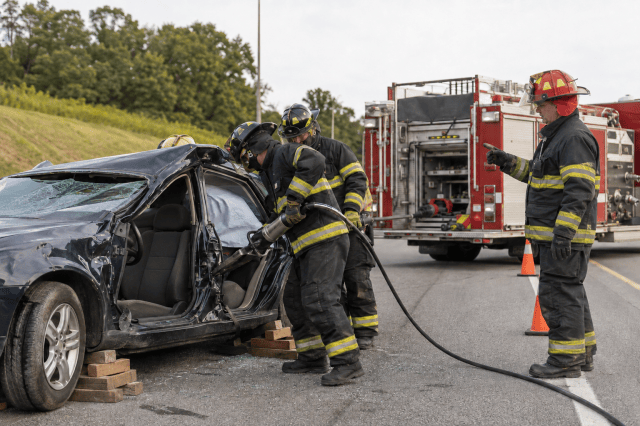
One of the most common leadership mistakes occurs when the company officer becomes absorbed in operating a rescue tool. Although officers should remain technically competent, their primary responsibility is supervising the entire operation.
The officer should maintain a position that allows observation of the rescue area, tool operators, stabilization systems, medical personnel, and surrounding hazards. From this position, the officer can identify developing problems, coordinate resources, and ensure that the extrication plan remains appropriate.
If the officer must perform a hands-on task because of staffing limitations, another qualified individual should be assigned to monitor overall safety and coordination. Someone must always maintain the broader view of the incident.
Maintain Fire Protection and Hazard Control
A charged hose line or another appropriate means of fire protection should be available when fuel leakage, damaged electrical components, smoking materials, or other ignition hazards are present. Firefighters assigned to fire protection should be ready to act and should not become distracted by the extrication.
Vehicle fluids should be identified and controlled when possible. Fuel, oil, coolant, battery electrolyte, and cargo materials can create fire, exposure, and slipping hazards. Glass, sharp metal, loaded bumpers, lift-gate struts, seatbelt pretensioners, and undeployed airbags must also be treated as potential energy hazards.
With the growing number of hybrid and electric vehicles, officers must ensure that firefighters can recognize high-voltage cables, battery locations, thermal-runaway warning signs, and manufacturer-specific emergency procedures. A damaged electric vehicle battery may create a prolonged fire, toxic atmosphere, or delayed reignition hazard.
Manage Personnel and Prevent Overcrowding
Extrication scenes often attract more responders than can safely work around the vehicle. The company officer should limit the number of firefighters in the immediate rescue area and rotate personnel during prolonged incidents.
Accountability must be maintained, particularly when several departments or agencies are involved. Every responder should operate within the incident command system and report to an identified supervisor. Mutual-aid companies should be given specific assignments rather than simply being directed toward the wreckage.
The officer should also monitor firefighters for fatigue, heat stress, cold exposure, and loss of concentration. Tool operators performing demanding work may need to be relieved before they recognize their own fatigue.
Prepare the Removal Path Early
Patient removal should be planned before disentanglement is complete. The officer should determine where the patient will exit, where the stretcher will be positioned, and how the patient will be transferred to the ambulance. Debris, equipment, hose, and unused tools should be removed from the pathway.
If an air ambulance is responding, a safe landing zone should be established without delaying ground transport when immediate movement to a trauma center is more appropriate. The officer should coordinate with EMS command so that the extrication and transportation plans support one another.
Once the patient is removed, the officer should verify that no additional occupants remain in or around the vehicles. A secondary search should include passenger compartments, cargo areas, beneath vehicles, and the surrounding impact area.
Conclude With Accountability and Improvement
Supervision continues after the patient leaves the scene. Before terminating command, the officer should confirm that all personnel and equipment are accounted for, hazards have been transferred to the appropriate agency, and the roadway is safe for recovery operations.
Contaminated tools and protective equipment should be cleaned, inspected, and returned to service. Damaged equipment must be documented and removed from service when necessary. Reports should accurately describe vehicle conditions, stabilization methods, extrication actions, patient-removal times, hazards, and unusual circumstances.
A brief post-incident review gives the crew an opportunity to discuss what worked, what caused delays, and what should be improved. The purpose is not to assign blame. It is to strengthen future performance. Lessons identified during the review should be incorporated into upcoming company training.
Conclusion
Successful automobile extrication depends on disciplined supervision as much as it depends on powerful rescue tools. The fire company officer must control the scene, protect responders from traffic, stabilize the vehicle, coordinate rescue and medical priorities, manage hazards, and maintain clear communication throughout the incident.
The best officers resist the urge to focus only on cutting the vehicle. They maintain the wider view, anticipate the next problem, and ensure that every action supports the safest possible outcome for the patient and the rescuers. At an extrication scene, calm leadership creates order, and that order allows technical skill, teamwork, and patient care to come together effectively.

