
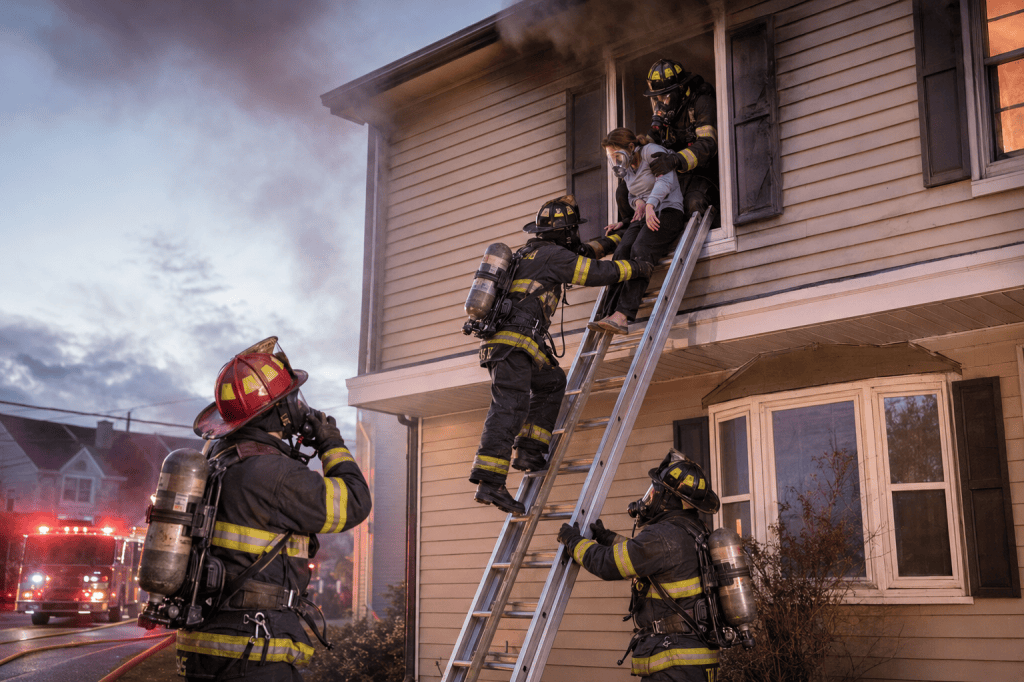
Vent-enter-search, commonly called VES or VEIS when isolation is emphasized, is a focused search tactic used to reach potentially trapped occupants through an exterior window or other approved opening. At a residential fire, VES can place firefighters directly into bedrooms and other high-priority areas that may be difficult to reach through the structure’s interior.
VES is not simply breaking a window and entering a room. It is a coordinated fireground operation that requires sound judgment, disciplined execution, effective communication, and close supervision. The company officer must balance the urgency of the rescue opportunity against changing fire conditions, the effects of ventilation, and the capabilities of the assigned crew.
Begin With a Focused Size-Up
Before committing firefighters, the officer should conduct or obtain the best possible size-up. Important considerations include:
- The probable location and extent of the fire.
- Known or suspected occupant locations.
- The time of day and sleeping areas.
- Smoke and fire conditions at the selected window.
- Wind direction and its potential effect on the opening.
- Building construction and signs of structural instability.
- The location of the interior stairway and normal travel paths.
- Existing doors, windows, and other ventilation openings.
- Progress of the attack line and water application.
- Availability of ladders, staffing, and rapid intervention resources.
Reports from occupants, neighbors, police officers, or other firefighters can help identify bedrooms and likely victim locations. A visible child’s bedroom, air-conditioning unit, toys, or information from family members may help prioritize the search, but assumptions must still be verified. Pay special attention to the wind as it increases the air entrainment into the structure.
Modern residential fires may become ventilation controlled before firefighters arrive. Opening a window can introduce oxygen, increase burning, and create or alter a flow path. The officer must consider where air will enter, where fire gases will travel, and whether the selected room can be isolated. Fire research and national guidance emphasize evaluating openings, wind conditions, fire location, and flow paths before changing the building’s ventilation profile.
Select the Right Room
VES is most effective when directed toward a specific, searchable space with a reasonable probability of containing an occupant. Bedrooms are common priorities, particularly during nighttime incidents, but other areas may be selected when reliable information indicates that someone is trapped.
The officer should avoid treating VES as random window entry. Each selected opening should have a clear objective. Before entry, the crew should attempt to identify:
- What room is behind the window.
- Whether the room appears tenable or searchable.
- Whether a door separates it from the fire area.
- How the firefighter will enter and exit.
- Whether the ladder will remain available.
- What conditions would require immediate withdrawal.
Windows showing flames, turbulent smoke, extreme heat, or other rapidly deteriorating conditions may not provide a reasonable entry point. The presence of a victim does not eliminate the need for judgment; it increases the need for coordinated and deliberate action.
Coordinate Ventilation with Fire Attack
The word “vent” in VES should never suggest uncontrolled ventilation. Breaking or opening the window changes conditions inside the building. Whenever possible, the VES assignment should be coordinated with the incident commander and the engine company advancing the attack line. Everyone should be engaged because it is going to change the interior environment.
The officer should determine whether water is being applied, whether the fire has been controlled, and whether interior crews are approaching the area. If the attack line is not ready, the officer must consider whether opening the window will worsen conditions for the search crew, occupants, or firefighters operating elsewhere.
Current NFPA materials describe ventilation as a controlled and coordinated action and recognize ventilation for search as a tactic intended to facilitate firefighter movement into an area to search for victims.
Make Isolation a Priority
Once the firefighter enters the room, locating and controlling the interior door is normally an immediate priority. Closing the door can isolate the room from the hallway, limit the movement of heat and smoke, and improve conditions for both the firefighter and any victim.
For this reason, many departments use the term vent-enter-isolate-search. The added word reinforces a critical action: control the connection between the room and the rest of the fire building.
The firefighter should sweep the floor near the window before entering, descend in a controlled manner, locate the door, and close it when conditions and departmental procedures permit. If the door cannot be located, cannot be closed, or has already failed, the firefighter should report that information immediately. The officer must then determine whether the room remains searchable or whether the crew should withdraw.
The search should generally remain within the isolated room unless the incident action plan, department procedures, fire conditions, and staffing support extending beyond it. An open doorway can place the firefighter directly into the structure’s flow path.
Maintain Crew Integrity and Accountability
The officer must know who is entering, which opening is being used, and how long the firefighter has been operating. Freelancing cannot be tolerated. Guessing where the bedroom is located vents the building and puts firefighters in the wrong room.
Depending on staffing and departmental procedures, one firefighter may enter while another remains at the window or ladder to provide orientation, monitor conditions, assist with victim removal, and protect the exit point. The officer should maintain direct supervision whenever possible and remain positioned where conditions, communications, and crew progress can be evaluated.
The ladder should be securely placed and should remain at the entry window. Its placement must support both entry and emergency escape. If multiple windows are being searched, each opening must be clearly communicated and tracked so no firefighter is left without a known exit route.
Accountability should include:
- Crew identification and assigned tactical channel.
- Exact side, floor, and window of entry.
- Time of entry.
- Air supply and work-cycle monitoring.
- Search progress.
- Victims located or removed.
- Changes in conditions.
- Confirmation that the crew has exited with PAR.
Communicate in Clear, Useful Terms
Good radio reports are brief but specific, they key word here is specific. Instead of reporting, “We’re doing VES,” the officer should describe the actual location and progress:
“Command from Truck 1 officer: beginning VES, second-floor bedroom, Side Charlie, Bravo corner, two members.”
Progress reports should identify whether the room was isolated, whether a victim was found, whether the search is complete, and whether the crew has exited. The officer must immediately communicate hazards such as an uncontrolled door, fire entering the room, a blocked escape route, structural deterioration, or a firefighter experiencing difficulty.
The officer should also listen to reports from the attack crew and incident commander. A sudden loss of water, change in strategy, worsening fire conditions, or evacuation order may require the VES crew to withdraw immediately.
Establish Withdrawal and Mayday Criteria
Before entry, firefighters should understand the conditions that will cause them to leave. These may include:
- Rapidly increasing heat.
- Fire entering the room.
- Loss of room isolation.
- Deteriorating structural conditions.
- A blocked, damaged, or displaced ladder.
- Low-air alarm or equipment failure.
- Loss of contact with the crew or officer.
- An evacuation order or change to defensive operations.
If a firefighter becomes lost, trapped, disoriented, injured, low on air without a clear exit, or unable to reach the window, a Mayday should be transmitted without delay. The company officer must reinforce that early Mayday provides the incident commander with more time and options.
Prepare for Victim Removal
Locating a victim is only part of the assignment. The officer must anticipate how the victim will be moved through the window and down the ladder. Removing an unconscious adult or child may require additional personnel, a second ladder, a roof ladder used as a slide, a stokes basket, or another department-approved method.
The officer should request assistance early instead of waiting until the search firefighter is exhausted or the victim is already at the window. Once the victim is removed, medical care should begin promptly without allowing the remaining search operation to lose supervision.
Train Before the Fire
VES is a high-risk, time-sensitive tactic that should be practiced under controlled conditions before it is attempted at an actual structure fire. Training should include:
- Ground-ladder placement.
- Window clearing and hazard removal.
- Controlled entry and exit.
- Room and door orientation.
- Door control and isolation.
- Thermal-imaging-camera use.
- Searches under zero visibility.
- Victim movement through windows.
- Low-staffing situations.
- Air-management emergencies.
- Mayday procedures.
- Communication with attack and command personnel.
Officers should train crews to recognize that the thermal imaging camera is a helpful tool, not a substitute for physical searching, orientation, and situational awareness.
Leadership Makes the Difference
Successful VES operations depend on more than individual courage. They depend on the company officer’s ability to slow the moment down mentally while the operation moves quickly physically.
The best officers identify a specific rescue objective, evaluate the fire and flow path, coordinate with suppression crews, control the opening, emphasize isolation, maintain accountability, and establish clear withdrawal criteria. They place firefighters where they can make a meaningful rescue while continuing to evaluate whether the expected benefit justifies the risk.
VES can be one of the most effective life-saving tactics used at a residential fire, but it must be performed as a coordinated search operation—not as an independent act of ventilation. When company officers combine urgency with discipline, they give their firefighters and the occupants they are searching for the best opportunity to survive.
 The Third Bugle