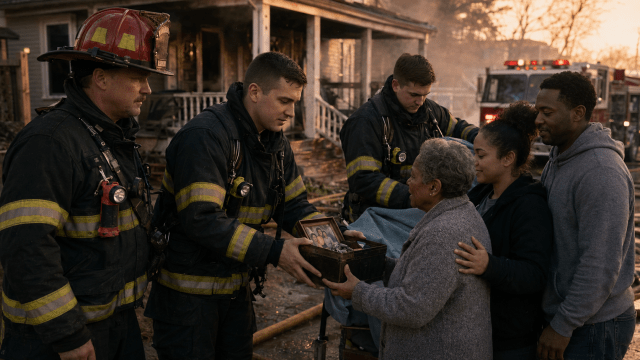
Firefighters are entrusted with extraordinary responsibilities. They enter people’s homes, care for vulnerable patients, protect private property, make decisions under pressure, and represent their department in public. Because of that trust, learning to be a firefighter involves more than mastering ladders, hose lines, search techniques, and emergency medicine. Young firefighters must also develop the moral courage and ethical judgment required to use their authority responsibly.
Fire company officers play a central role in that development. Policies and classroom lectures are important, but younger firefighters often learn the fire service’s real values by watching their officers. They notice how an officer treats a frightened patient, protects a citizen’s belongings, handles a mistake, speaks about coworkers, and responds when no supervisor is present. Every shift is therefore an opportunity to teach what honorable service looks like.
Lead by Example
The most effective ethical instruction begins with the officer’s conduct. Younger firefighters quickly recognize the difference between what leaders say and what they do. An officer who demands honesty but conceals mistakes teaches concealment. An officer who speaks about respect but humiliates subordinates teaches that dignity is conditional.
Conversely, officers who admit errors, keep promises, follow department policies, and treat everyone fairly demonstrate that integrity is a daily practice. Ethical leadership is visible in ordinary actions: arriving prepared, completing reports accurately, maintaining equipment, speaking respectfully, and accepting responsibility for the crew.
Officers should remember that they are always teaching—even when they do not intend to.
Explain the Meaning Behind the Traditions
Fire service traditions can create identity, pride, and belonging. However, younger firefighters should understand that tradition does not justify every longstanding behavior. Officers must help them distinguish between traditions that strengthen the profession and habits that conflict with modern expectations.
Service, courage, sacrifice, teamwork, and respect for those who came before are traditions worth preserving. Hazing, discrimination, dishonesty, dangerous shortcuts, and the mistreatment of new members are not. “That is how it has always been done” is not an ethical justification.
Good officers teach recruits to respect the history of the fire service while also accepting responsibility for improving its future.
Connect Ethics to Everyday Work
Ethics should not be treated as an abstract subject reserved for annual training. Moral decisions occur throughout an ordinary shift. They arise when firefighters:
- Enter a citizen’s home or business.
- Handle personal property.
- Encounter confidential medical information.
- Post photographs or comments on social media.
- Complete patient-care and incident reports.
- Observe unsafe or improper conduct.
- Interact with people from unfamiliar backgrounds.
- Participate in training and testing.
- Decide whether to report damage or acknowledge a mistake.
- Speak about citizens after an incident.
Officers can use these moments to explain why certain behaviors matter. Protecting property preserves public trust. Accurate reports protect patients, firefighters, and the department. Confidentiality respects a person’s dignity. Reporting an error allows the organization to correct hazards before someone is injured.
When officers connect ethical principles to actual calls, younger firefighters learn that integrity is part of operational competence.
Use Realistic Discussions and Scenarios
Ethical decision-making improves through practice. Officers can present short scenarios during morning meetings, meals, or informal company training. For example:
- A firefighter sees another member take a small item from a fire-damaged home.
- A crew member posts an incident photograph online.
- A senior firefighter pressures a recruit to ignore a safety rule.
- An officer discovers that a report contains inaccurate information.
- A patient refuses care, but family members demand transportation.
- A firefighter hears a coworker make a discriminatory remark.
- A crew damages property and no one else appears to have noticed.
Ask the crew what they would do, which values are involved, who could be harmed, and what department policies apply. The goal is not simply to identify a rule. It is to develop the habit of considering consequences, duties, rights, fairness, and public trust before acting.
Teach Respect for Human Dignity
Firefighters meet people during some of the worst moments of their lives. A cluttered home, addiction, poverty, mental illness, disability, cultural differences, or poor personal decisions should never become excuses for ridicule.
Officers must insist that citizens and patients be treated with dignity. This includes guarding their privacy, using respectful language, avoiding unnecessary judgment, and remembering that the public may hear conversations made near an incident scene.
The station deserves the same standard. Teasing that humiliates, initiation practices that endanger, and conduct that isolates a member should not be dismissed as harmless tradition. Strong crews can joke and build camaraderie without degrading anyone.
Create an Environment Where Firefighters Can Speak Up
Moral courage is the willingness to do what is right despite social pressure or personal risk. Younger firefighters may recognize misconduct but remain silent because they fear retaliation, ridicule, or exclusion.
Company officers should make it clear that respectful questions and safety concerns are welcome. A firefighter who says, “This does not seem safe,” or “I do not believe this is right,” should be heard rather than immediately labeled disloyal.
This does not eliminate discipline or the chain of command. It strengthens both by ensuring that concerns can be raised appropriately. Officers should teach firefighters how to speak up professionally: state the concern clearly, explain the potential harm, recommend an alternative, and follow reporting procedures when necessary.
Correct Behavior Without Destroying the Person
Young firefighters will make mistakes. Officers must distinguish between an honest error, poor judgment, reckless behavior, and deliberate misconduct. Each requires a different response.
Minor errors may call for coaching and retraining. Repeated carelessness may require formal correction. Dishonesty, harassment, theft, discrimination, or intentional disregard for safety may require immediate reporting and discipline.
Whatever the situation, correction should focus on the conduct and the expected standard. Public humiliation may produce compliance, but it rarely produces mature ethical judgment. Private, direct, and specific coaching is usually more effective: explain what occurred, why it was wrong, who could have been harmed, and what must happen next.
Accountability and dignity can exist together.
Encourage Humility and Personal Responsibility
Firefighters receive public attention and are often viewed as heroes. Officers should teach younger members to appreciate that respect without developing entitlement. The uniform does not place firefighters above the public; it increases their responsibility to the public.
Humility means continuing to learn, accepting feedback, recognizing personal limitations, and asking for help before a weakness becomes a danger. Personal responsibility means preparing for duty, maintaining fitness and competence, caring for equipment, and owning the consequences of one’s decisions.
A professional firefighter does not ask only, “Can I get away with this?” The better question is, “Is this consistent with the trust placed in me?”
Praise Ethical Conduct
Departments often recognize dramatic rescues, technical proficiency, and physical performance. Officers should also acknowledge honesty, compassion, restraint, fairness, and moral courage.
Recognition does not need to be formal. A simple comment—“You handled that patient respectfully,” or “Thank you for reporting that mistake immediately”—reinforces the behavior the organization wants repeated.
What leaders consistently notice becomes part of the crew’s culture.
Conclusion
The moral and ethical foundations of firefighting cannot be taught in a single lecture. They are developed through observation, discussion, practice, correction, and reflection. Company officers shape this development every day through their decisions and through the standards they permit within the firehouse.
Young firefighters must learn that character is as essential as competence. The public expects firefighters to be skilled enough to solve difficult problems, disciplined enough to operate safely, and ethical enough to be trusted when citizens are most vulnerable.
A company officer’s legacy is not measured only by how well the crew advances a hose line or raises a ladder. It is also measured by the kind of firefighters—and the kind of people—the crew members become.

