
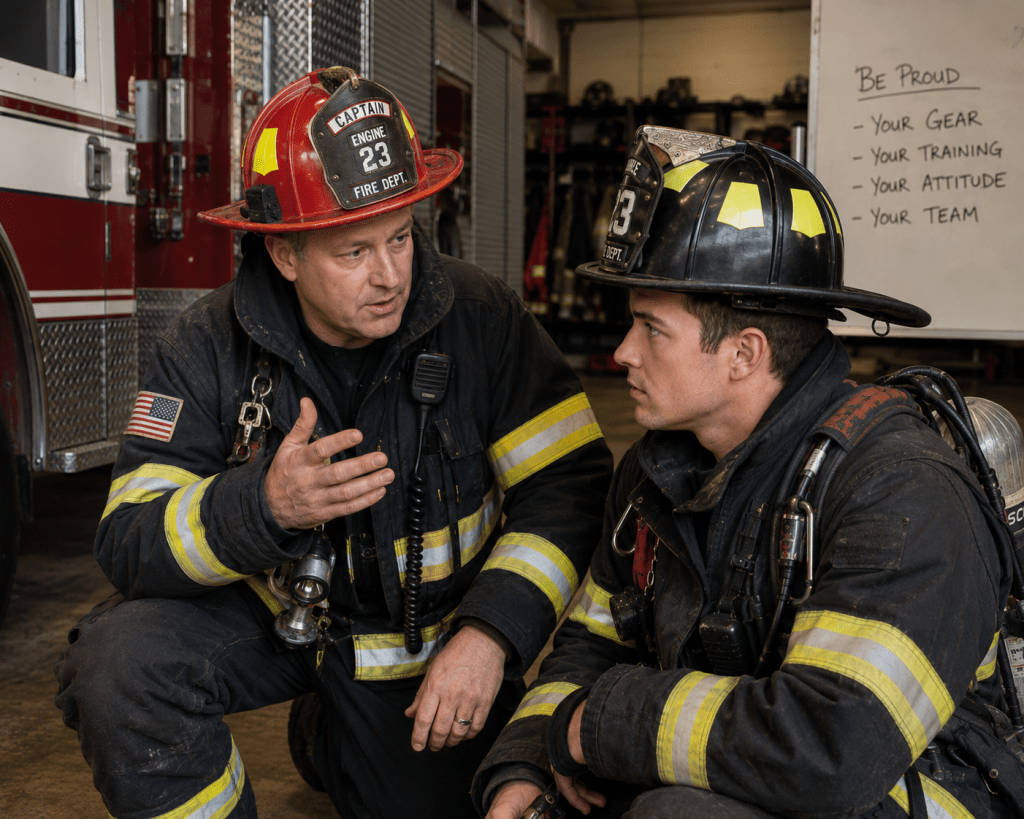
Every firefighter remembers the first day they walked into the fire station. New boots. New gear. A mixture of excitement, pride, and uncertainty. While new recruits spend months learning the technical skills necessary to earn their certification, they quickly discover that joining a fire department is about far more than putting out fires. They are entering a profession with a deeply rooted culture, high expectations, and a family unlike any other.
For a new firefighter, the company officer becomes the single most important influence during those first weeks and months. More than anyone else, the officer determines whether the new employee merely survives the probationary period or develops into a confident, competent, and respected member of the crew.
Great officers understand that onboarding is not a checklist—it is leadership in action.
Set Expectations Early
One of the greatest sources of anxiety for a probationary firefighter is not knowing what is expected. Company officers should eliminate uncertainty by clearly explaining station routines, performance standards, daily responsibilities, training expectations, and department values from the beginning.
Explain everything that veteran firefighters simply take for granted:
● Morning station duties
● Uniform standards
● Apparatus checks
● Cleaning assignments
● Meal traditions
● Physical fitness expectations
● Report writing
● Response procedures
● Chain of command
Nothing should be left to assumption. What seems obvious to a firefighter with twenty years of experience may be completely foreign to someone on their first shift.
When expectations are clearly communicated, new firefighters can focus on learning rather than worrying about making unnecessary mistakes.
Remember What It Was Like
Experienced firefighters sometimes forget how overwhelming the job felt on day one.
The new firefighter is trying to remember radio procedures, building layouts, equipment locations, policies, names, and personalities—all while hoping not to embarrass themselves in front of the crew.
Company officers who remember their own probationary period tend to be more patient teachers.
Patience does not mean lowering standards.
It means understanding that confidence develops through repetition, coaching, and experience—not criticism.
The goal is improvement, not perfection.
Build Confidence One Success at a Time
Confidence is earned through small victories.
Rather than waiting for emergency incidents to become learning opportunities, officers should intentionally create daily successes.
Ask the probationary firefighter to:
● Complete apparatus checks independently.
● Demonstrate SCBA proficiency.
● Stretch hose lines.
● Tie rescue knots.
● Review pre-plans.
● Operate portable radios.
● Lead short equipment reviews.
Each successful task reinforces competence.
As confidence grows, responsibility can gradually increase.
Firefighters who experience steady success become more willing to ask questions, volunteer for assignments, and continue learning.
Make Training Part of Every Shift
Training should never stop after the academy.
The best company officers treat every day as an opportunity to sharpen skills.
Five or ten minutes of focused hands-on training often produces better long-term results than occasional marathon drills.
Review:
● Hose deployment
● Forcible entry
● Ground ladders
● Search techniques
● Pump operations
● Building construction
● EMS scenarios
● Fire behavior
● Hazard recognition
Most importantly, explain the why behind every procedure.
Understanding why firefighters perform tasks a certain way creates better decision-makers rather than firefighters who simply memorize steps.
Pair Them With Positive Mentors
Every probationary firefighter needs someone besides the officer they feel comfortable approaching with questions.
Selecting the right mentor is critical.
Choose firefighters who:
● Lead by example.
● Demonstrate professionalism.
● Enjoy teaching.
● Maintain positive attitudes.
● Practice safely.
● Take pride in the organization.
Unfortunately, probationary firefighters often imitate whoever spends the most time with them.
Company officers should ensure that influence comes from the department’s best role models—not its loudest critics.
Culture spreads quickly.
Make sure the right culture spreads first.
Correct Mistakes Professionally
Mistakes will happen.
The question is not whether they occur—it is how officers respond.
Correct behavior immediately but respectfully.
Avoid public embarrassment whenever possible.
Instead of asking:
“What were you thinking?”
Ask:
“Walk me through your thought process.”
This simple change encourages discussion rather than defensiveness.
After the correction, explain the proper method, demonstrate it if necessary, and then allow the firefighter to perform the task correctly.
Mistakes become powerful learning experiences when handled constructively.
Teach the Culture—Not Just the Job
Every department has traditions that are never written in policy manuals.
Respect.
Humility.
Integrity.
Taking care of equipment.
Helping your crew before yourself.
Owning your mistakes.
Serving the public with professionalism.
Company officers must intentionally teach these values because they are just as important as operating a nozzle or throwing a ladder.
Technical skills create firefighters.
Character creates professionals.
Give Regular Feedback
One of the worst things an officer can say during a probationary evaluation is, “This shouldn’t be a surprise.”
If performance problems exist, discuss them immediately.
Likewise, recognize improvement just as quickly.
Constructive feedback should become a routine conversation rather than an annual event.
Simple comments like:
“Your hose deployment has improved significantly this week.”
or
“Let’s spend extra time tomorrow working on radio communications.”
provide direction while building trust.
Nobody improves without feedback.
Include Them in the Team
Probationary firefighters often feel like outsiders.
Company officers should intentionally include them in station life.
Invite conversation.
Ask their opinions.
Include them during meals.
Encourage questions.
Celebrate accomplishments.
Being accepted by the crew is often just as meaningful as mastering technical skills.
The strongest companies understand that belonging motivates people to perform at their highest level.
Lead by Example Every Day
New firefighters are constantly observing.
They notice how officers interact with citizens.
How they treat other firefighters.
How they handle stress.
How they maintain equipment.
How they prepare for emergencies.
How they admit mistakes.
Company officers teach continuously—even when they say nothing.
The behaviors officers consistently demonstrate become the behaviors new firefighters believe are acceptable.
Leadership is always on display.
The Legacy of Leadership
Every fire department is only one generation away from losing its traditions, professionalism, and operational excellence.
Today’s probationary firefighter will someday become tomorrow’s engineer, lieutenant, captain, battalion chief, or fire chief.
The investment made during those first months will echo throughout an entire career.
Company officers are not simply training firefighters.
They are shaping the future culture of their department.
The greatest legacy an officer leaves behind is not the fires they fought or the rescues they made.
It is the firefighters they developed.
When company officers invest time, patience, and leadership into new employees, they create professionals who are competent, confident, and committed to serving their communities with honor. In the fire service, that investment pays dividends for decades.
 The Third Bugle