The Third Bugle Fire Training
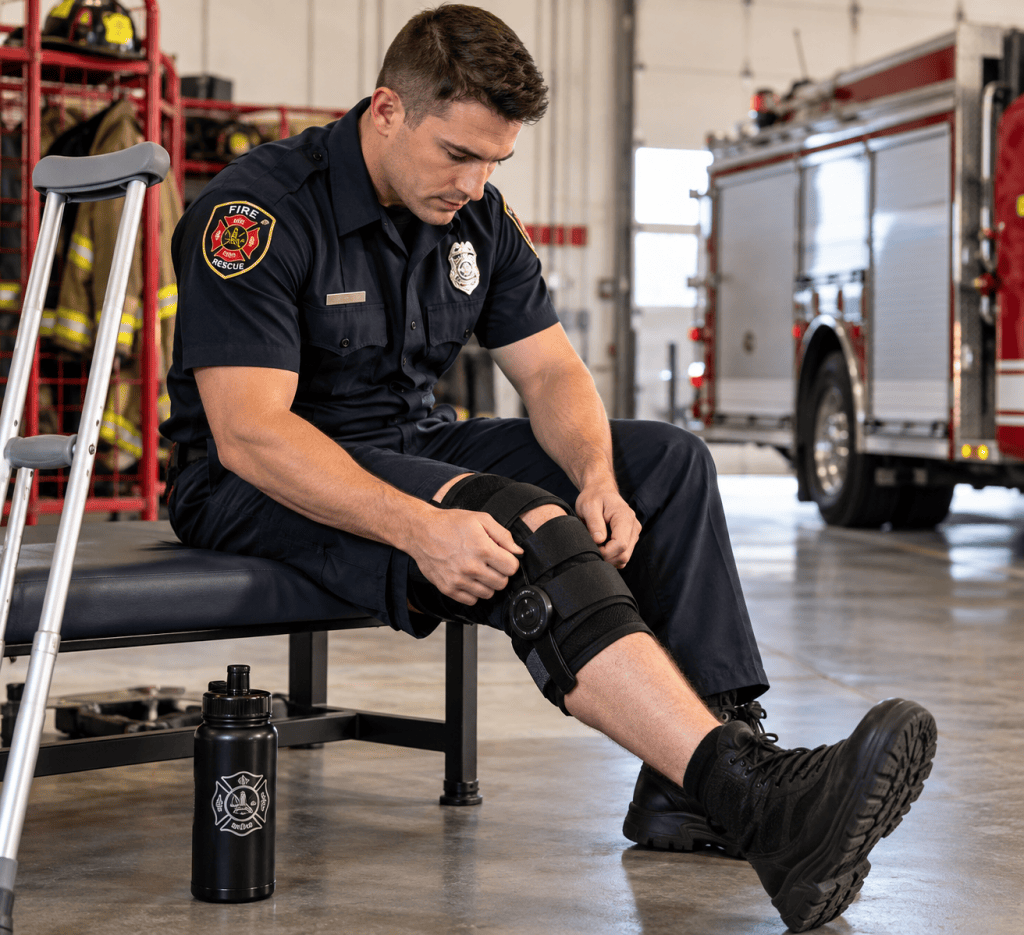
In the fire service, injuries are an unfortunate reality of the profession. Whether it is a strained back from lifting a patient, a torn ligament during a training evolution, a shoulder injury from advancing a hoseline, or a serious injury sustained at a working fire, the physical demands of firefighting can take a toll on even the most experienced firefighters. While much of our training focuses on preventing injuries, we spend considerably less time discussing what happens after a firefighter gets hurt. Recovering from an injury is not simply about healing physically. It is also about rebuilding confidence, restoring mental resilience, and finding the determination to return to the job safely and effectively.
For many firefighters, an injury represents more than a temporary interruption in their careers. Firefighting is often closely tied to personal identity, pride, and a sense of belonging. Firefighters are accustomed to being the individuals who respond when others need help, not the ones who need assistance themselves. When an injury suddenly removes a firefighter from operational duties, the resulting frustration, isolation, and uncertainty can sometimes be as difficult to manage as the physical injury itself.
Accepting the Injury and the Recovery Process
One of the first challenges injured firefighters face is accepting that recovery takes time, and not truly looking forward to light duty. The fire service attracts individuals who are motivated, competitive, and accustomed to pushing through difficult circumstances. Those characteristics are valuable on the fireground, but they can become counterproductive during rehabilitation. Attempting to return to full duty prematurely or ignoring medical restrictions can aggravate an injury and potentially extend the recovery period.
Successful recovery begins with recognizing that rehabilitation is not a sign of weakness. It is an essential part of returning to operational readiness. Firefighters should approach their recovery with the same discipline they apply to training, equipment maintenance, and emergency operations. Following medical recommendations, attending physical therapy, maintaining appropriate activity levels, and recognizing limitations are all important components of the process.
Perhaps most importantly, firefighters must understand that recovery is not always linear. There will be good days and difficult days. Progress may come quickly during one phase and slow considerably during another. Maintaining realistic expectations helps prevent frustration from undermining the rehabilitation process.
Maintaining a Firefighter’s Mindset
Physical injuries often create psychological challenges that are overlooked. An injured firefighter may experience frustration, anxiety, depression, or concern about whether they will ever perform at their previous level. Some may worry about losing their position on the apparatus, missing promotional opportunities, or becoming a burden to their fellow firefighters.
Maintaining a positive mindset does not mean pretending that everything is fine. Instead, it means recognizing the challenges, developing realistic goals, and maintaining a sense of purpose throughout recovery. Firefighters should focus on what they can control rather than dwelling on what they temporarily cannot do.
These concerns can be particularly difficult in a profession where physical capability and teamwork are central to daily operations.
Setting small, measurable rehabilitation goals can be especially beneficial. Regaining a certain range of motion, increasing strength, completing a prescribed exercise program, or progressing toward a functional assessment can provide tangible evidence of improvement.
When emotional difficulties become overwhelming, firefighters should be encouraged to seek support from peer support teams, behavioral health professionals, or employee assistance programs. Mental recovery deserves the same attention as physical rehabilitation.
Staying Connected to the Firehouse
One of the greatest challenges of being injured is losing the daily connection with fellow firefighters. The firehouse is more than a workplace. It is a community built around shared experiences, trust, humor, and mutual dependence. When a firefighter is removed from that environment for an extended period, feelings of isolation can develop.
Company officers and department leadership play an important role in preventing that isolation. Maintaining regular communication with injured firefighters demonstrates that they remain valued members of the organization. A phone call or text can have a huge impact on their morale and recovery.
When medically appropriate and permitted by department policy, injured firefighters may benefit from participating in classroom training, administrative assignments, fire prevention activities, or other modified-duty responsibilities. These opportunities allow firefighters to remain engaged while respecting their physical restrictions.
However, maintaining contact should never become pressure to return before they are medically ready. The goal is to support the firefighter, not accelerate the recovery process for staffing convenience.
Fellow firefighters also have a responsibility. A simple telephone call, a visit, or an invitation to a firehouse gathering can make a meaningful difference. The same brotherhood and sisterhood that firefighters demonstrate during emergency incidents should extend to members recovering from injuries.
Rebuilding Physical Readiness
Returning to firefighting requires more than the absence of pain. The physical demands of emergency operations require strength, endurance, mobility, balance, and the ability to perform strenuous tasks while wearing personal protective equipment and self-contained breathing apparatus.
A firefighter who has recovered sufficiently to perform normal daily activities may not yet be prepared to advance a charged hoseline, climb multiple flights of stairs, operate on a roof, or remove a victim from a hazardous environment.
For that reason, rehabilitation should progress toward the specific physical requirements of firefighting. Under the direction of qualified medical and rehabilitation professionals, recovery may include cardiovascular conditioning, muscular strengthening, flexibility, balance, and task-specific functional training.
Departments should consider using structured return-to-duty evaluations that reflect essential job functions. These assessments should be individualized, consistent with medical restrictions, and conducted under appropriate supervision.
The objective is not simply to get the firefighter back on the apparatus. It is to ensure the firefighter can safely perform the duties expected of them without creating an unreasonable risk to themselves or their crew.
Restoring Confidence on the Fireground
Even after an injury has physically healed, a firefighter may struggle with confidence. A firefighter recovering from a fall may hesitate while operating on a ladder. Someone injured during a structural collapse may experience apprehension when entering a damaged building. A firefighter returning from a significant back injury may question their ability to lift equipment or assist with a rescue.
These reactions should not automatically be interpreted as a lack of courage or commitment. They can be understandable responses to a traumatic experience.
Confidence is often rebuilt through preparation, repetition, and successful performance. Company officers should consider gradually reintroducing returning firefighters to appropriate training activities, beginning with controlled evolutions and progressing toward more demanding scenarios as their medical clearance and capabilities allow. Consider the firefighters returning to work from a severe mayday injury.
Training provides an opportunity to evaluate skills, identify limitations, and reinforce safe operating practices without the immediate pressures of an emergency incident.
Officers should also communicate openly with returning firefighters. Asking whether they have concerns about particular tasks can identify issues before those concerns become operational problems.
A firefighter who feels supported and adequately prepared is better positioned to return to emergency operations with confidence.
The Company Officer’s Responsibility
Company officers have a significant influence on how successfully injured firefighters return to work. Their responsibilities extend beyond ensuring that staffing assignments are filled.
An effective company officer should understand the department’s return-to-duty procedures, respect medical restrictions, maintain appropriate communication, and create an environment where recovering firefighters can discuss concerns without fear of ridicule.
Officers should avoid making assumptions about a firefighter’s capabilities based solely on appearances. Just because someone looks healthy does not mean they have fully recovered. Conversely, an injury should not automatically define a firefighter’s future abilities.
When a firefighter returns to the company, the officer should review any applicable work restrictions, coordinate with the department’s occupational health personnel, and ensure that training and assignments remain within the firefighter’s authorized capabilities.
Company officers should also discourage the culture of working through injuries simply to demonstrate toughness. Firefighters who conceal pain or refuse to report injuries may unintentionally place themselves and their crews at greater risk.
Leadership means recognizing when someone needs assistance and providing the support necessary for a safe return.
Turning Setbacks into Opportunities
Although no firefighter wants to experience an injury, the recovery process can sometimes create opportunities for personal and professional growth.
Time away from emergency operations may provide an opportunity to pursue additional education, complete professional development courses, study for promotional examinations, or strengthen technical knowledge. Firefighters may also use the experience to evaluate their physical conditioning, recovery habits, and long-term health.
An injury can also provide a different perspective on the importance of safe operating procedures. Firefighters who have experienced significant injuries may become stronger advocates for physical fitness, rehabilitation, injury prevention, and operational risk management.
Departments can benefit from these experiences by encouraging firefighters to share lessons learned when they are comfortable doing so. Understanding how an injury occurred, what contributed to it, and what might prevent similar incidents can improve organizational safety.
The objective should never be to assign blame. It should be to learn from the experience and reduce the likelihood that another firefighter will suffer the same injury.
Recognizing That Not Every Recovery Ends the Same Way
It is also important to recognize that some injuries result in permanent physical limitations. Despite excellent medical care, dedicated rehabilitation, and tremendous personal effort, not every firefighter will be able to return to unrestricted emergency operations.
This reality can be especially difficult for individuals who have devoted much of their lives to the profession.
Departments should approach these situations with compassion, professionalism, and a commitment to helping affected firefighters explore appropriate alternatives. Depending on the circumstances, opportunities may exist in training, prevention, investigation, administration, emergency management, or other public safety roles.
A firefighter’s value to the organization should never be measured exclusively by their ability to perform interior structural firefighting.
Years of experience, operational knowledge, leadership ability, and professional judgment remain valuable assets even when physical limitations change the role someone can perform.
Final Thoughts: The Comeback Is Part of the Job
Firefighters are trained to overcome adversity. Every emergency incident presents obstacles that require discipline, adaptability, teamwork, and perseverance. Recovering from an injury requires many of those same qualities, although the challenges are often more personal and the progress considerably slower.
The most successful recoveries involve more than individual determination. They require appropriate medical care, structured rehabilitation, supportive leadership, encouragement from fellow firefighters, and a department culture that places long-term health ahead of short-term staffing needs.
There is a difference between being tough enough to work through pain and being disciplined enough to recover properly. The first may satisfy a firefighter’s pride, but the second demonstrates the judgment necessary for a long and successful career.
Firefighters should never feel that an injury makes them less valuable to their department or their fellow firefighters. An injury may temporarily change what they can do, but it does not erase their experience, dedication, or commitment to serving others.
In the end, bouncing back from an injury is not about proving that nothing happened. It is about acknowledging what happened, doing the work necessary to recover, and returning to the profession in the safest and most capable manner possible.
The fire service teaches us that no firefighter should face a dangerous situation alone. That principle should apply just as strongly when one of our own is fighting their way back from an injury.

